
Adv. Jyotish Raj
Associate Advocate
Delhi NCR
B.A. LL.B. (University of Lucknow), LL.M. (SRMU)
- RERA Matters
- Real Estate Disputes
Delayed possession or a broken booking promise? We take it to UP-RERA.
Our UP RERA lawyers represent homebuyers and developers in Lucknow before the UP-RERA Principal Bench, Lucknow (Rajya Niyojan Sansthan, Kalakankar House, Old Hyderabad), the U.P. Real Estate Appellate Tribunal (UP-REAT), Lucknow, and the Allahabad High Court, Lucknow Bench (Chamber D-311). We handle builder-buyer disputes, possession delay and compensation claims, Section 18 refunds, and RERA appeals.
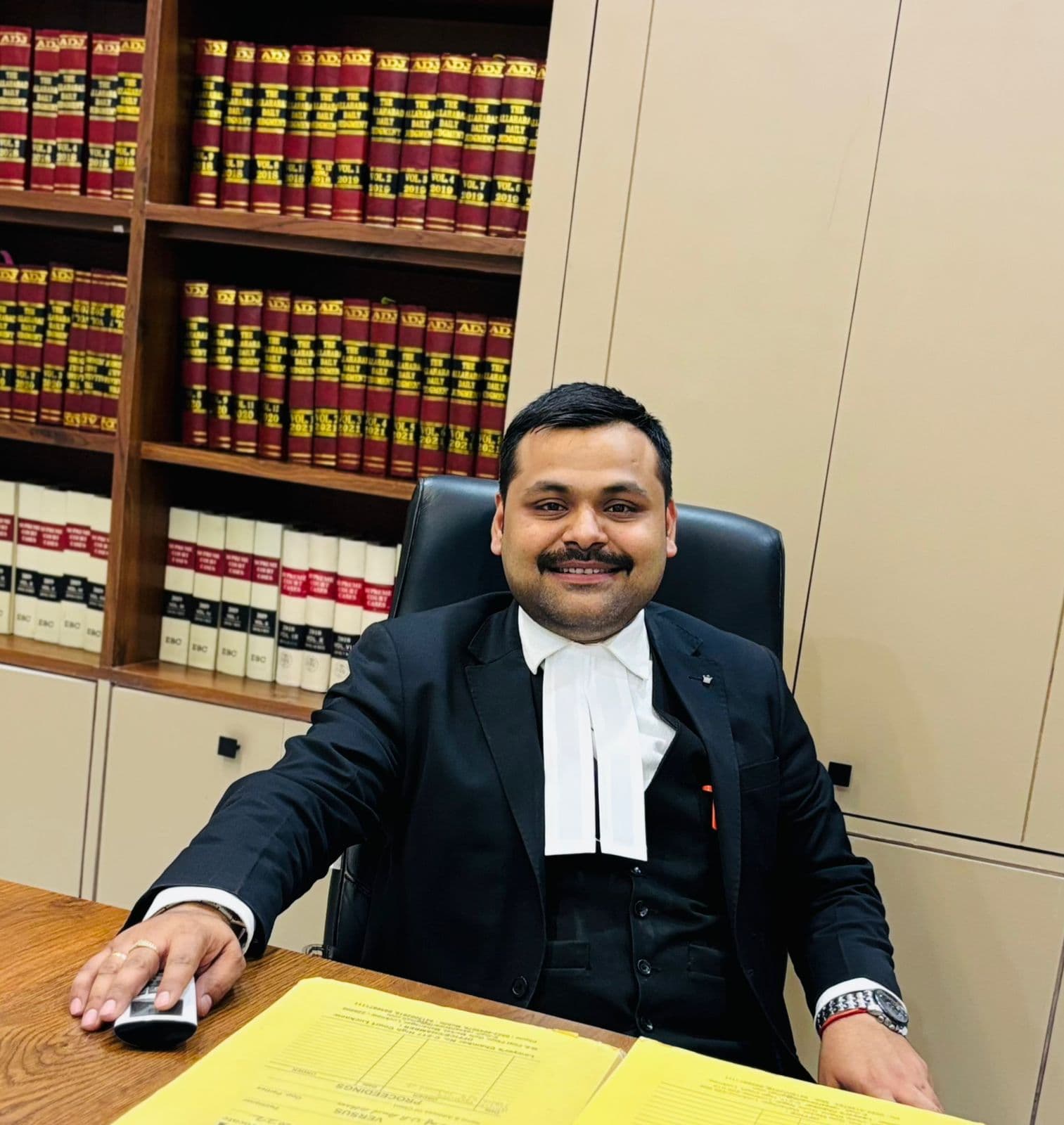
Over 8 years of practice before the Allahabad High Court, Lucknow Bench
UP-RERA • RERA Appellate Tribunal • Allahabad High Court, Lucknow Bench
Adv. Jitendra Tiwari leads our RERA practice. Adv. Jyotish Raj contributes his recorded RERA and real estate dispute focus, supported by associates with civil, commercial and contract experience.
Associate Advocate

Associate Advocate
Reach our Lucknow team at Shushant Golf City or our chamber at the Allahabad High Court, Lucknow Bench in Gomti Nagar. Please call to confirm the appropriate chamber and arrange your consultation before visiting.
Ask about the project registration, agreement, promised possession date and the relief you want: possession, refund, delay interest or compensation. A suitable advocate should explain the Authority, adjudicating officer and appellate routes, along with deposits, deadlines and order enforcement. Share payment records and any settlement or previous order. Confirm drafting, hearings and fees. No lawyer can guarantee a refund amount, recovery date or outcome against a builder.
Sumanjari & Co. Advocates is a second-generation law firm with 30+ years of legal experience and 10,000+ cases solved by its team. Each advocate's individual practice areas are listed on their profile; no outcome is guaranteed.
Your case is handled by an identified advocate of the firm — not an anonymous call-centre or intake desk.
Strategy, likely outcomes, and the stage-by-stage plan are explained before you engage — no vague promises.
Representation across the full lifecycle — from the Authority to the Appellate Tribunal to the Allahabad High Court, Lucknow Bench.
Real estate disputes under the Real Estate (Regulation and Development) Act, 2016 can be complex and drawn out — whether the issue is a delayed handover, a disputed project registration, or a builder who has fallen short of the commitments made at booking. We represent both individual homebuyers and institutional clients before UP-RERA and the RERA Appellate Tribunal.
We handle the full range of builder-buyer disputes, delayed possession claims, project registration and compliance matters, and appeals — with the aim of securing possession, compensation, or refund at the earliest possible stage, and pursuing appellate or execution remedies where required. This practice serves homebuyers and developers with real estate matters in Lucknow.
A RERA advocate reviews the builder-buyer agreement, promised possession date, payment receipts, project registration details, and correspondence with the developer to assess the available remedies. Our real estate lawyers assist with preparing complaints, presenting supporting documents, responding to the other party, and pursuing appeals or enforcement of orders where appropriate. The relief available depends on the facts, the agreement, and the applicable law; no particular outcome is guaranteed.
For ownership, title verification, partition, sale deeds, or land disputes outside the RERA context, see our property and land legal services.
Our chambers are based at Chamber D-311, Allahabad High Court, Lucknow Bench. We represent homebuyers and developers in Lucknow before the UP-RERA Principal Bench at Rajya Niyojan Sansthan, Kalakankar House, Old Hyderabad, Lucknow, and in appeals before the U.P. Real Estate Appellate Tribunal (UP-REAT), Lucknow. For an initial review, bring your builder-buyer agreement, payment records, the promised possession date, and correspondence with the developer so the relevant documents and next steps can be assessed.
Check the current allocation for a Lucknow project at UP-RERA, Lucknow. The regional office at Greater Noida in Gautam Buddh Nagar handles matters allocated to it for western Uttar Pradesh, including relevant NCR projects; the lawyer's address does not decide the original forum. Appeals from the Authority or adjudicating officer are distinct proceedings before UP-REAT at Lucknow. Any subsequent High Court appeal or other challenge needs a separate statutory and territorial assessment, not an assumption that every case belongs at the Lucknow Bench.
We handle builder-buyer disputes, stalled projects, and RERA/LDA compliance across Lucknow's growth corridors — Sushant Golf City (Shaheed Path), Gomti Nagar Extension, Vrindavan Yojna, Sultanpur Road, Faizabad Road, Sitapur Road, and Kanpur Road in Lucknow. For projects in Noida, Greater Noida or Ghaziabad, use our dedicated NCR page linked below.
Representation before UP-RERA and the RERA Appellate Tribunal for Lucknow homebuyers and developers, including complaints, possession delays, refund claims and appeals. Our chambers are at Block D-311, Allahabad High Court, Lucknow Bench.
Meet our Delhi/NCR team and explore representation for builder-buyer disputes, delayed possession and refund claims involving projects in Noida and Ghaziabad.
We begin with a confidential consultation to understand the facts and documentation, followed by clear advice on the likely outcomes and the strategy best suited to your matter. Where possible, we work towards a negotiated or mediated resolution with the builder or developer — but we are fully prepared to pursue the matter through UP-RERA, the Appellate Tribunal, and execution proceedings where necessary.
The statutory basics that decide most builder-buyer matters — the same provisions we argue before UP-RERA and the Appellate Tribunal.
Where Section 18 conditions are met, a buyer remaining in the project may seek interest for every month of delay until possession, while a buyer withdrawing may seek return of the amount paid with prescribed interest. The agreement, facts and applicable orders must be reviewed.
Delay interest is calculated at the prescribed rate — the State Bank of India’s highest marginal cost of lending rate (MCLR) plus the margin set under the RERA rules — applied to the amount the buyer has paid. We confirm the exact rate applied in your matter.
Section 44 generally allows an appeal from the Authority or adjudicating officer within sixty days from receipt of the order copy. UP-REAT may admit a delayed appeal for sufficient cause, but condonation is not automatic.
For a promoter appeal, Section 43(5) requires at least 30% of a penalty, or a higher percentage set by the Tribunal; the total amount payable to the allottee including interest and compensation; or both, as applicable. It is not a universal 30% deposit for a refund award.
Registered carpet-area disclosures, sanctioned plans, representations and agreed specifications help assess differences between what was promised and delivered. The appropriate remedy depends on the alleged default, statutory conditions and supporting evidence.
Non-compliance may require execution or recovery under Section 40 and the applicable procedure. Monetary recovery and enforcement of other directions are distinct. A recovery certificate still requires action by the competent authority; it is not an automatic cash refund.
General information on the law, not legal advice on your specific matter. Outcomes depend on the facts and documents in each case.
The key provisions separate Authority complaints, compensation adjudication, appellate remedies and enforcement. Check the current Uttar Pradesh rules, official directions and applicable decisions for the particular project.
| Law | Key provisions | Where it matters |
|---|---|---|
| RERA Act, 2016: registration and promoter obligations | Sections 3, 4, 11 and 13 | Project registration, disclosures, promoter duties and the agreement for sale; examine the registered phase and applicable exemptions. |
| RERA Act, 2016: allottee remedies | Sections 12, 14, 18 and 19 | Representations, sanctioned plans, qualifying defects, possession, refund and interest; the facts and statutory conditions determine the relief. |
| RERA Act, 2016: complaints and interim directions | Sections 31, 34, 35, 36 and 38 | Authority complaints, inquiry and appropriate interim orders. Refund and interest must be distinguished from compensation adjudication. |
| RERA Act, 2016: adjudication of compensation | Sections 71 and 72, read with Sections 12, 14, 18 and 19 | The adjudicating officer determines compensation under the specified provisions, considering the statutory factors and supporting evidence of loss. |
| RERA Act, 2016: appellate remedies | Sections 43(5), 44 and 58 | UP-REAT appeals, receipt-based limitation and promoter pre-deposit; a further High Court appeal has separate statutory grounds and territorial requirements. |
| RERA Act, 2016: recovery and enforcement | Section 40 | Monetary recovery and enforcement of directions follow the applicable prescribed mechanisms. An order or recovery certificate does not ensure immediate collection. |
| Uttar Pradesh Real Estate (Regulation and Development) Rules, 2016; applicable regulations and directions | Prescribed interest, complaint forms and fees, service, compensation and execution procedures | Check the current amended rules and official filing directions for the project and remedy; rates, forms and administrative allocation should not be assumed from an older case. |
For a Lucknow project, the forum, the statutory provision and the remedy must match. Confirm the current bench allocation, rules and binding decisions before filing.
| Law | Key provisions | Where it matters |
|---|---|---|
| UP-RERA Regulatory Authority Bench (Kalakankar House, Old Hyderabad, Lucknow) | Section 18(1) & Section 31, RERA Act, 2016 | Full refund of principal with prescribed delay interest (SBI Highest MCLR + 1% as per UP RERA Rules), or monthly delay interest until valid Occupancy/Completion Certificate (OC/CC) handover (Newtech Promoters and Developers Pvt. Ltd. v. State of U.P. jurisdiction rule). |
| Adjudicating Officer (AO), UP-RERA | Sections 12, 14, 18(2), 18(3) & 71, RERA Act, 2016 | Adjudicating unliquidated compensation for false brochure promises (Section 12), unauthorized layout or structural alterations (Section 14), defective title (Section 18(2)), and mental harassment. |
| Execution & Recovery Certificate (RC) Enforcement | Section 40(1), RERA Act & U.P. Revenue Code, 2006 | Online execution application after 45/60 days of builder non-compliance, issuance of a Recovery Certificate (RC) to the District Magistrate (Lucknow), then tehsil attachment of builder bank accounts and unsold inventory as arrears of land revenue. |
| Uttar Pradesh Real Estate Appellate Tribunal (UP-REAT), Lucknow | Sections 43(5) & 44(2), RERA Act, 2016 | 60-day appeal window against UP-RERA orders; mandatory pre-deposit of at least 30% of a penalty or 100% of principal plus interest awarded to the allottee before a promoter appeal can be heard (Newtech Promoters). |
| Allahabad High Court, Lucknow Bench (Chamber D-311) | Section 58, RERA Act (second appeal within 60 days on a substantial question of law) & Article 226 writ of mandamus | Enforcing unexecuted RCs against inactive District Magistrates/Tehsildars and defending homebuyer decrees against builder appeals. |
Six stages explain how a Lucknow RERA matter may proceed, with a separate route for compensation and further steps for appeal or non-compliance. Not every case needs every stage; the outcome and timing depend on the facts and the competent forum.
Stage 1
Forum: UP-RERA, Lucknow, subject to the current project allocation and jurisdiction
We begin with a confidential consultation to understand the facts, your expectations and any urgent dates, while safeguarding your privacy. Identify the registered project and phase, promoter entity, unit number and project address. For a Lucknow project, check the current UP-RERA allocation rather than selecting a bench by the buyer's residence or the advocate's chamber. Registration, completion status and the nature of the alleged default affect maintainability. A dispute over title or a development authority's decision may require a different remedy from a complaint against the promoter.
Disclose earlier complaints, consumer proceedings, settlements, orders and any promoter insolvency. These records help identify whether the next step is an original complaint, compensation adjudication, an appeal or execution. Obtain the complete orders and record when copies were received. A fresh complaint should not be assumed to reopen an issue already decided, and overlapping proceedings need advice on maintainability and double recovery before any new filing.
Key provisions: Sections 3, 31 and 71, RERA Act, 2016
Stage 2
Forum: Document assessment before the appropriate UP-RERA complaint or compensation route
Prepare a chronology from booking through the promised possession date to the present position. Match each payment to a receipt or bank entry, separate disputed charges, and retain possession offers, occupancy or completion records and written extensions. Registration extensions and contractual grace clauses need examination; neither should be treated as automatically deciding the buyer's entitlement. Record whether the buyer wants to remain in the project or withdraw.
Where Section 18 applies, withdrawal may support return of the amount paid with prescribed interest; remaining in the project may support monthly delay interest until possession. Compensation is a distinct adjudication under Sections 71 and 72, not simply another name for refund or interest. Identify each claim, the evidence supporting it and the competent decision-maker. Draft calculations with their assumptions visible, and review settlements or prior orders that may alter the available remedy. We explain the strengths, risks and available legal routes before agreeing a case-specific strategy.
Key provisions: Sections 18, 19, 71 and 72, RERA Act, 2016; Applicable Uttar Pradesh RERA Rules
Stage 3
Forum: UP-RERA Authority or the competent adjudicating officer, as applicable
The agreed strategy is translated into precise pleadings supported by the reviewed documents. A Section 31 complaint should identify the alleged violations, correct parties, project registration and specific directions sought. Refund and prescribed interest fall within the Authority's remit, while adjudication of compensation under Sections 12, 14, 18 and 19 belongs to the adjudicating officer. Check current portal instructions, prescribed forms, fee, authorisation and annexure requirements. An online submission does not by itself establish that the chosen route or relief is maintainable.
Keep the filing acknowledgement and complete submitted papers, answer registry defects and follow the directions for service and replies. If interim protection is necessary, identify the urgency and the legal basis for a separate request rather than assuming filing suspends a cancellation or demand. Developers responding to complaints should provide the agreement, payment account, approvals and factual explanation, with supporting records. Hearing dates and procedural directions must be tracked independently of informal settlement discussions.
Key provisions: Sections 31, 35, 36, 38 and 71, RERA Act, 2016
Stage 4
Forum: The UP-RERA bench or adjudicating officer hearing the matter
We prepare and present the evidence and arguments with attention to the forum's directions and filing deadlines. Organise the evidence around disputed dates, payments and obligations. Compare the agreement and registered disclosures with the promoter's reply, possession communications and any completion documents. Explain missing records, defaults alleged against the allottee and the basis of the interest calculation. Compensation claims need evidence of the alleged loss and the statutory factors, rather than a figure unsupported by documents. Follow the forum's directions for affidavits, submissions and attendance.
If settlement is proposed, specify the amount or possession obligation, instalments, interest, default consequences and treatment of pending proceedings before signing. After adjudication, obtain the complete order and read its operative directions, compliance period and calculation basis. Record receipt and service dates, payments already made and any obligation that remains uncertain. The statutory disposal framework is not a guaranteed decision date; hearing requirements, contested evidence and case circumstances can affect the actual course. We provide updates after each hearing, explain the directions made and confirm any next steps or filing deadlines requiring your instructions.
Key provisions: Sections 18, 38, 71 and 72, RERA Act, 2016
Stage 5
Forum: Uttar Pradesh Real Estate Appellate Tribunal (UP-REAT), Lucknow
Section 44 generally allows sixty days from receipt of the copy of the Authority's or adjudicating officer's order to appeal. Preserve that evidence and identify legal or factual errors with reference to the record. A delayed appeal requires sufficient cause and is not assured admission. Consider whether an interim stay is needed, because filing an appeal alone does not suspend the order or erase the obligation to comply with it.
A promoter appealing under Section 43(5) must address the statutory pre-deposit: at least thirty per cent of a penalty, or a higher percentage determined by the Tribunal; the total amount payable to the allottee including interest and compensation; or both, as applicable. It is not a general thirty-per-cent cap on the buyer's award. Further High Court recourse under Section 58 has its own grounds, time requirements and territorial rules; the appropriate bench must be checked for the particular order.
Key provisions: Sections 43(5), 44 and 58, RERA Act, 2016
Stage 6
Forum: UP-RERA execution process; competent Collector or District Magistrate where recovery is directed
If the compliance period passes without performance, prepare the execution request using the order, proof of service and a calculation of what remains due. Distinguish an unpaid monetary direction from an obligation to deliver possession, rectify a defect or perform another act. Section 40 separates recovery and enforcement mechanisms; the appropriate application depends on the operative order and prescribed procedure. An execution request should identify earlier receipts and avoid overstating the unpaid balance.
Where a recovery certificate is issued, track its transmission and action with the competent revenue authority rather than treating the certificate as payment. For a Lucknow project, confirm which district and officer the certificate actually addresses. Check for an appellate stay, insolvency moratorium or other legal restriction before taking further steps. Recoverability depends on compliance and available legal mechanisms, not only the merits of the complaint, so neither a collection date nor a cash refund can be promised. After resolution, we explain any remaining compliance requirements and identify further legal steps or support you may need.
Key provisions: Section 40, RERA Act, 2016; Applicable Uttar Pradesh recovery and enforcement procedure
Common questions homebuyers and developers bring to us — drawn from our RERA practice in Lucknow.
Identify the registered project, phase, promoter and current bench allocation, then prepare the prescribed complaint with the agreement, payment record, chronology and specific relief. Section 31 is the complaint provision. The Authority determines refund and interest claims within its remit; compensation under Sections 12, 14, 18 and 19 is adjudicated by the adjudicating officer under Section 71. Check current portal requirements, fees and service directions before filing.
Ask Us About This →Section 18 addresses failure to complete or give possession in accordance with the agreement and other specified circumstances. Where the conditions apply, a buyer wishing to withdraw may seek return of the amount paid with prescribed interest. A buyer remaining in the project may seek interest for every month of delay until possession. Review the committed date, payments, possession offer, approvals, extensions and any settlement before selecting the remedy; registration extensions do not alone decide the claim.
Ask Us About This →Bring the booking and allotment papers, agreement, project and phase registration, payment ledger with receipts or bank entries, demands, possession communications and relevant approval records. Add the complete correspondence, cancellation or defect notices and any technical report. Share every prior complaint, settlement, order, appeal or insolvency notice, with dates of receipt. These documents help distinguish a fresh claim from compensation, appeal or execution and support a calculation of the actual relief sought.
Ask Us About This →Section 44 generally allows sixty days from receipt of the order copy to appeal to UP-REAT; delay may be condoned for sufficient cause, not automatically. Under Section 43(5), a promoter must deposit at least thirty per cent of a penalty, or a higher percentage set by the Tribunal; the total amount payable to the allottee including interest and compensation; or both, as applicable. Thirty per cent is not a universal deposit for a refund award. A stay requires separate consideration.
Ask Us About This →Review the advocate's relevant practice, who will handle the case and how the proposed relief, forum, evidence and risks are explained. Discuss drafting, hearings, fees, communication and whether an appeal or execution needs a separate engagement. A professional assessment should distinguish possession, refund, interest and compensation without promising a result. The appropriate choice depends on the matter and representation arrangements, not an unsupported ranking or a guarantee of success.
Ask Us About This →No. Examine the project location and registration, statutory jurisdiction and current UP-RERA allocation. Lucknow and the regional office at Greater Noida serve different administrative areas; confirm the allocation for the particular project rather than using the buyer's or lawyer's address alone. Appeals to the Uttar Pradesh Real Estate Appellate Tribunal are distinct from the original complaint. Any later High Court remedy requires its own territorial and statutory assessment.
Ask Us About This →The RERA Authority's powers concerning refund and prescribed interest are distinct from the adjudicating officer's role under Section 71 in adjudging compensation under Sections 12, 14, 18 and 19. Compensation should be supported by the pleaded loss, evidence and Section 72 factors. Labelling every monetary claim as compensation, or asking one forum to decide all remedies without checking its powers, can create procedural problems. The appropriate route depends on the actual relief and prior proceedings.
Ask Us About This →No. Check the order's compliance period, service, payments received and any appellate stay. Non-compliance may require an execution request and, where appropriate, recovery proceedings under Section 40 and the applicable procedure. A recovery certificate still needs action by the competent authority and is not a cash refund. Promoter insolvency, a moratorium or other proceedings may affect the available route and recovery. Neither the payment date nor successful collection can be guaranteed.
Ask Us About This →A homebuyer seeking possession with delay interest may need a different case strategy from one seeking withdrawal and refund. Compensation, interest, project compliance, appeals and enforcement also have distinct statutory requirements. We review the agreement, project registration, promised possession date, extensions, payments and earlier proceedings before identifying the competent authority and available relief. Filing a complaint does not guarantee an immediate refund or possession.
Share the allotment letter, builder-buyer agreement, receipts, demand letters, possession communications, project details and any settlement or prior order. Record what was promised, paid, delivered and disputed, with dates. An unpaid order may require enforcement rather than a fresh complaint; an appeal has its own deadline and requirements. For projects in the NCR region, see our dedicated Noida and Ghaziabad RERA service.
File UP-RERA complaints online via Form M/N.
Read Article →TRIPARTITE RISKS, RBI RULES & HIGH COURT RELIEF
Read Article →SECTION 3 PROHIBITIONS & ADVANCE TOKEN RECOVERY
Read Article →SUPREME COURT PRECEDENTS & SECTION 2(ZA)(II) PARITY
Read Article →SANCTIONED MAPS, 2/3RD CONSENT & SUPERTECH PRECEDENT
Read Article →PROTECTING DELAY COMPENSATION & WAIVER CLAUSES
Read Article →SECTION 14(3) LIABILITY & BUILDER WARRANTIES
Read Article →FORUM SELECTION & PORTAL TRAPS
Read Article →SECTION 18 STATUTORY REMEDIES & STRATEGIC CHOICE
Read Article →THE LANDMARK NEWTECH BIFURCATION RULE
Read Article →SECURING THE RECOVERY CERTIFICATE (RC)
Read Article →CONTEMPT PROCEEDINGS AGAINST INACTIVE DMS
Read Article →IBC MORATORIUMS & BANK MORTGAGE CONFLICTS
Read Article →THE 60-DAY APPEAL TRAP & LIMITATION STRATEGIES
Read Article →SECTION 43(5) MANDATORY 100% BUILDER DEPOSIT
Read Article →RELEASING PRE-DEPOSITED FUNDS & DEFEATING STAYS
Read Article →STATUTORY APPEAL VS CONSTITUTIONAL REMEDIES
Read Article →LUCKNOW BENCH VS ALLAHABAD PRINCIPAL SEAT JURISDICTION
Read Article →JURISPRUDENTIAL STANDARDS & EVIDENTIARY THRESHOLDS
Read Article →SECURING PUNITIVE COSTS & VACATING STAYS
Read Article →ARTICLE 136 JURISPRUDENCE & DEFENDING YOUR DECREE
Read Article →AMITABH KANT COMMITTEE PACKAGE & OVERCOMING AUTHORITY DUES
Read Article →SYNCHRONIZING UP RERA, NCLT, NCDRC & HIGH COURT WRITS
Read Article →DRAFTING BULLETPROOF CONSENT DECREES & DEFAULT TRAPS
Read Article →WHY WE ARE THE BEST RERA ADVOCATES IN LUCKNOW
Read Article →Speak with our team about your builder-buyer dispute, possession delay, or project compliance matter in Lucknow. We represent clients before UP-RERA, the RERA Appellate Tribunal, and the Allahabad High Court, Lucknow Bench, as appropriate to the matter.
Sumanjari & Co. Advocates
30+ years of firm-wide legal experience across practice areas.Each matter is assessed on its own facts and applicable law.