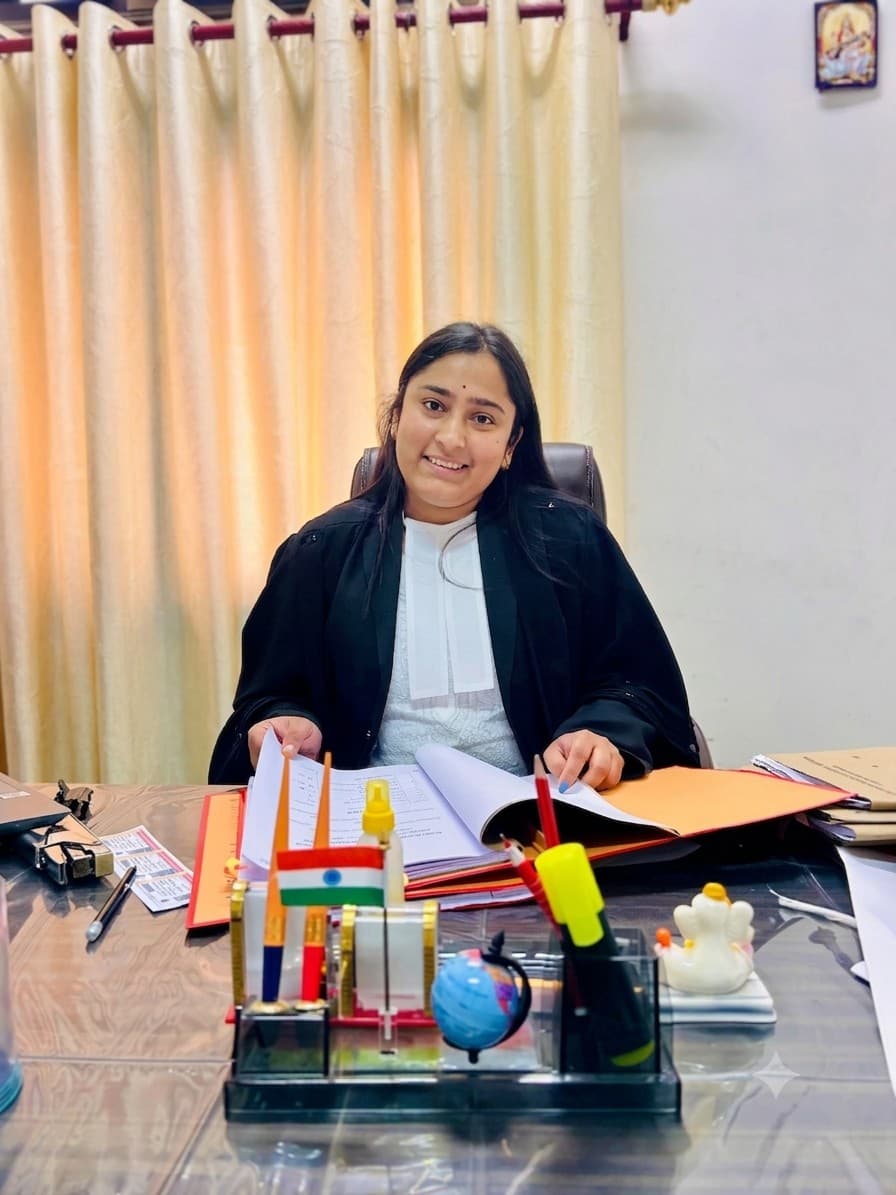
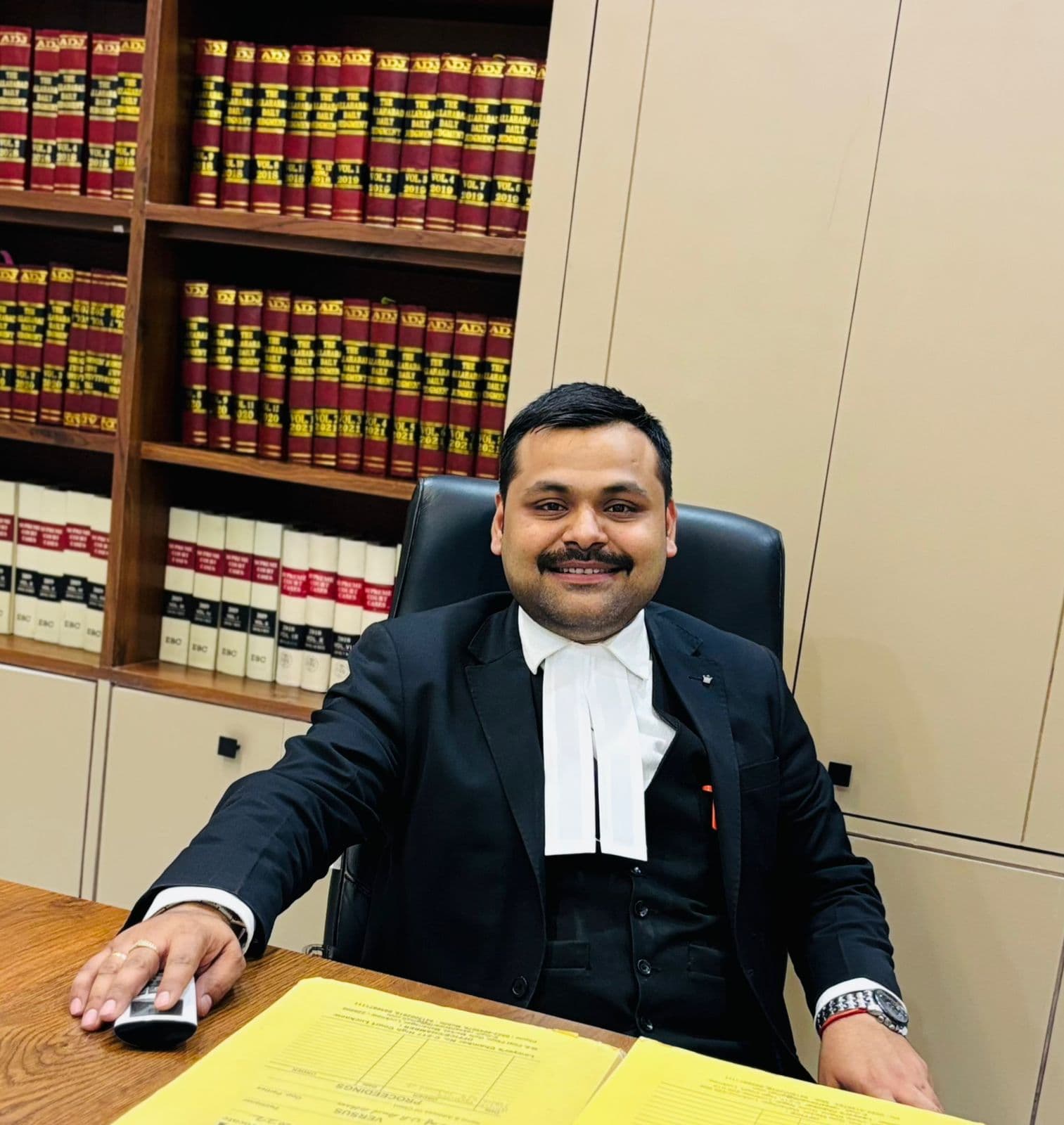
Adv. Jitendra Tiwari
Director
Lucknow & Allahabad
B.A. LL.B. (Hons.)
- Property & Land
- Civil & Criminal Matters
- Revenue Matters
Our writ petition lawyers and constitutional advocates in Lucknow represent clients in Public Interest Litigation and fundamental rights matters under Article 226 before the Allahabad High Court, Lucknow Bench.
Adv. Aishwarya Pandey (Associate Partner) and Adv. Jitendra Tiwari (Director) lead the constitutional and writ practice, supported by Adv. Prabhash Yadav (LL.M. Constitutional Law) and Adv. Abhishek Mishra (PIL & Writs). Case allocation depends on the subject matter and forum.
Director

Associate Advocate

Associate Advocate
Reach our Lucknow team at Shushant Golf City or our chamber at the Allahabad High Court, Lucknow Bench in Gomti Nagar. Please call to confirm the appropriate chamber and arrange your consultation before visiting.
Ask how the advocate will assess territorial jurisdiction, alternative statutory remedies, delay and the public-law grounds for intervention. Share the challenged decision, proof of service, earlier representations and any related proceedings. Writ petitions, supervisory remedies and PIL have different requirements; a High Court filing is not a substitute for every appeal. Confirm drafting and appearance arrangements and fees. No lawyer can guarantee admission, an interim stay or a favourable writ order.
Sumanjari & Co. Advocates is a second-generation law firm with 30+ years of legal experience and 10,000+ cases solved by its team. Each advocate's individual practice areas are listed on their profile; no outcome is guaranteed.
Article 226 of the Constitution gives the High Court wide power to issue writs against the State, public authorities, and, in appropriate cases, private bodies — for the enforcement of fundamental rights and any other legal right. Sumanjari & Co. Advocates advises and represents individuals, groups, and institutions in writ petitions, PILs, and fundamental rights matters before the Allahabad High Court, Lucknow Bench.
Whether the matter involves illegal detention, arbitrary action by a government department, a service dispute outside tribunal jurisdiction, or an issue of public importance, we prepare each petition with careful attention to maintainability, alternative remedy, and the relief available under Article 226. For a step-by-step look at how a case moves through the Lucknow Bench — from filing to judgment and appeal — see our High Court lawyer in Lucknow guide.
Writ petitions under Article 226 for matters arising within the Bench’s jurisdiction, argued from our chambers at Block D-311.
Matters that fall within the jurisdiction of the Principal Seat rather than the Lucknow Bench.
Representations before the concerned authority at the pre-writ stage, where an alternative remedy must first be exhausted.
Article 32 petitions and special leave matters, in appropriate cases.
Article 226 writs and Article 227 supervision are distinct. The challenged action, respondent, territorial connection and statutory remedies determine the available route; current High Court rules and directions must be checked for filing and further challenge.
| Law | Key provisions | Where it matters |
|---|---|---|
| Constitution of India: Article 226 | Clauses (1), (2) and (3), as relevant to the relief and procedural position | Writ jurisdiction for fundamental and other legal rights, territorial cause of action, and specific safeguards concerning certain interim orders. Maintainability and relief remain subject to the governing principles. |
| Constitution of India: Article 227 | Superintendence over courts and tribunals within the territory, subject to constitutional limits | A supervisory jurisdiction distinct from Article 226 and an ordinary appeal. Civil-court judicial orders are ordinarily considered under Article 227, not through Article 226 certiorari. |
| Constitution of India: substantive rights | Articles 14, 16, 19 and 21 where the pleaded facts and claimant support the right invoked | Equality, covered public-employment rights, protected freedoms and personal liberty. A pleaded violation needs a factual and legal foundation; citing an Article alone does not establish relief. |
| United Provinces High Courts (Amalgamation) Order, 1948 | Clause 14 and applicable territorial-allocation decisions | Allocation between the Lucknow Bench and Principal Seat must be assessed with the material cause-of-action facts. A Lucknow residence or lawyer address alone is not sufficient. |
| Allahabad High Court Rules, 1952 and current directions | Applicable writ, supervisory, affidavit, registry, listing and special-appeal requirements | Correct case category, verified pleadings, complete annexures, service and available further procedure. Check current requirements and appeal exclusions for the specific jurisdiction exercised. |
| The statute governing the challenged action | Relevant appeal, revision, tribunal, notice and limitation provisions | Alternative remedies and recognised exceptions must be assessed before a writ. Constitutional jurisdiction is not an assured replacement for an effective statutory appeal. |
| Constitution of India: Article 136; applicable contempt law | Special leave; lawful enforcement of clear directions within the deciding forum's powers | Further challenge and non-compliance require distinct grounds. Special leave is discretionary, and contempt cannot enlarge the substantive relief granted in the original order. |
The Lucknow Bench assigns writ petitions to rostered benches by category. Selecting the correct category — and confirming whether the matter belongs before a Single Bench or Division Bench — is the first filing decision.
| Law | Key provisions | Where it matters |
|---|---|---|
| Writ-A (Service Writs) | Article 226 challenges to government employee suspension, disciplinary dismissal, transfer, promotion, and recovery from retiral dues (Union of India v. Rafiq Masih), and challenges to UPPST / CAT orders. | Single Bench writ petitions for state and covered public-sector employees aggrieved by service decisions. |
| Writ-B (Revenue & Consolidation Writs) | Article 226 / 227 challenges to Board of Revenue, Commissioner, Collector and DDC orders under the U.P. Revenue Code, 2006 and the U.P. Consolidation of Holdings Act, 1953. | Revenue and consolidation matters arising from the Tehsildar / SDM / Commissioner hierarchy in the Lucknow division. |
| Writ-C (Civil & Miscellaneous Administrative Writs) | Challenges to LDA / Uphav demolition or sealing notices, land acquisition compensation, arbitrary blacklisting of government contractors, passport impoundment, stamp valuation, and college / university regulations. | The residual administrative-law category for public-authority action affecting Lucknow residents and businesses. |
| Criminal Misc. Writ Petition (Division Bench) | Quashing of FIRs prior to chargesheet and protection against arbitrary arrest where the ingredients of a cognizable offence are absent (the Bhajan Lal parameters). | Heard by the Division Bench of the Lucknow Bench; distinct from Section 482 BNSS (formerly CrPC) quashing strategy. |
| Habeas Corpus Writ Petition | Urgent remedy against illegal detention by state authorities or unlawful private custody, seeking production and release of the detenu. | Listed on priority before the Lucknow Bench; the oldest and most immediate protection of personal liberty. |
| Article 227 Supervisory Petitions | Challenging interlocutory orders of Lucknow civil courts, family courts or tribunals that exceed jurisdiction or violate natural justice (Shalini Shyam Shetty; Radhey Shyam v. Chhabi Nath). | Supervisory — not appellate — jurisdiction over courts and tribunals within the Lucknow Bench’s territory. |
| Public Interest Litigation (WPIL) | Bona fide PILs complying with Chapter XXII Rule 1(3-A) of the Allahabad High Court Rules, with the credential disclosures mandated by State of Uttaranchal v. Balwant Singh Chaufal. | Genuine public-injury litigation; private grievances repackaged as PILs are liable to be dismissed with costs. |
The Lucknow Bench ordinarily requires a petitioner to exhaust the statutory appellate remedy first. But the Supreme Court in Whirlpool Corporation v. Registrar of Trade Marks settled four grounds on which a writ lies despite an appellate statute:
Where the petition seeks enforcement of a fundamental right under Part III of the Constitution, the Lucknow Bench entertains the writ without insisting on the statutory appellate route.
Orders passed without hearing (audi alteram partem) or unreasoned orders by the authority are a settled exception — the aggrieved party need not first exhaust the alternative remedy.
Where the impugned order is passed by an authority wholly without jurisdiction, the writ court intervenes directly, since the order is a nullity and the statutory appeal is no adequate answer.
A petition challenging the constitutional validity of the very statute, rule or notification under which the authority acted can be entertained directly, as the appellate authority cannot decide the vires of its parent statute.
We begin with a confidential review of the facts and the order or action under challenge, and advise clearly on maintainability, alternative remedy, and the relief available. Where a writ is the right course, we draft and file the petition promptly, seek interim relief where warranted, and represent you through to final hearing before the Allahabad High Court, Lucknow Bench.
The route depends on the decision and the jurisdiction invoked. These stages cover maintainability, statutory alternatives, the record, filing, interim relief, hearing and compliance. Neither filing nor admission guarantees a stay or the final remedy requested.
Stage 1
Forum: Allahabad High Court, Lucknow Bench or Principal Seat, subject to territorial allocation and the nature of the proceeding
Identify the decision, omission, detention or threatened action and the legal right affected. Article 226 permits the High Court to enforce fundamental rights and other legal rights, but the respondent and public-law duty matter. An ordinary private contractual grievance does not become a writ claim simply because other remedies are inconvenient. Certain writs have distinct requirements: habeas corpus concerns unlawful detention, while quo warranto examines entitlement to hold a qualifying public office.
Article 227 is a supervisory jurisdiction over courts and tribunals within the High Court's territory, not another name for an Article 226 writ or an unrestricted appeal. Judicial orders of civil courts are ordinarily considered, if supervisory intervention is justified, under Article 227 rather than certiorari under Article 226. Identify any available appeal or revision and the limited grounds of supervision. Tribunal decisions and administrative orders require their own assessment; labelling every challenge a writ petition can select the wrong route.
Key provisions: Articles 226 and 227, Constitution of India; Applicable statutory appeal or revision provisions for the challenged order
Stage 2
Forum: Allahabad High Court, Lucknow Bench or Principal Seat; competent statutory appellate authority where required
Map the material events giving rise to the claim: where the decision was made or implemented, the relevant authority and the facts necessary to establish the right asserted. Article 226(2) concerns the cause of action arising wholly or partly within the territory; the petitioner's residence or counsel's chamber is not enough by itself. Allocation between the Lucknow Bench and Principal Seat requires a separate check under the governing framework and applicable decisions.
Identify any effective statutory appeal, revision or tribunal remedy before proposing a writ. Recognised exceptions may include a properly supported breach of natural justice, lack of jurisdiction, enforcement of fundamental rights or challenge to statutory validity; merely using those labels does not require the court to entertain the petition. Explain delay, earlier proceedings and why the chosen route is appropriate. A writ does not revive an expired appeal as of right, and constitutional jurisdiction should not be assumed to suspend statutory limitation.
Key provisions: Article 226(2), Constitution of India; Clause 14, United Provinces High Courts (Amalgamation) Order, 1948 and applicable territorial-allocation decisions; Governing statutory remedy and principles of alternative remedy, delay and laches
Stage 3
Forum: Preparation for the competent High Court registry; records obtained from the deciding authority or lower forum
Assemble the complete challenged order, notice, reply, hearing record and documents establishing the legal right relied on. Use a dated chronology to separate facts supported by records from disputed assertions. Annexures should be legible, correctly indexed and referred to in the pleadings; obtain required copies and translations under current filing practice. Explain missing documents and how they can be obtained rather than presenting an incomplete extract as the whole decision.
Draft distinct grounds addressing jurisdiction, procedure, statutory interpretation or another recognised review error, and connect each ground to the record. Name the authority capable of granting the requested relief and persons whose rights would be directly affected. Plead all relevant earlier cases, adverse orders and representations with a properly verified supporting affidavit. A PIL requires an additional assessment of genuine public interest, standing, credentials and disclosure obligations; it must not be used to repackage a personal service or property dispute.
Key provisions: Articles 226 and 227, Constitution of India as appropriate; Allahabad High Court Rules, 1952 and current filing directions; Applicable PIL standing, disclosure and affidavit requirements
Stage 4
Forum: Allahabad High Court registry at the competent Bench or Principal Seat; court assigned by the current roster
Select the filing category according to the jurisdiction invoked, subject matter and relief, rather than treating an Article 226 petition, Article 227 matter and statutory appeal as interchangeable. Confirm current registry requirements for affidavits, annexures, authorisation, court fee and service. Any urgent listing request should identify the event requiring immediate consideration and include supporting material. Administrative acceptance of a filing does not establish maintainability or guarantee that the case will be heard immediately.
Resolve defects promptly and retain acknowledgment of filing and any permitted advance service. Check the listed matter, current roster and subsequent directions instead of relying on a previously used courtroom or listing pattern. If another court or authority has already been approached, disclose the result and the present status. Habeas corpus or other urgent liberty matters may need distinct procedural treatment; urgency should be explained on the facts and does not remove the duty to provide an accurate record.
Key provisions: Allahabad High Court Rules, 1952 and current registry, service and listing directions; Articles 226 and 227, Constitution of India as invoked
Stage 5
Forum: Allahabad High Court bench hearing the matter under the applicable roster
At initial consideration, the court may examine territorial jurisdiction, standing, alternative remedies, delay and whether the record supports interference. It may seek instructions or a response, issue notice, decline intervention or make another appropriate direction. Prepare to explain why the statutory route is inadequate in the particular case if relying on an exception. Admission or issuance of notice is not a finding that the challenged action is unlawful.
An interim application must identify the precise protection requested, its legal basis and the harm that may occur before final decision. Prima facie merits, balance of convenience, irreparable injury and public interest may be relevant, depending on the case. Filing a writ, seeking urgent listing or receiving notice does not automatically stay an order, recovery or proceeding. Read the operative terms, duration and conditions of any protection and complete service as directed. Exceptional relief without hearing the other side carries particular disclosure and procedural responsibilities.
Key provisions: Article 226, including clause (3) where its conditions apply; Applicable principles governing interim relief and the relevant statutory framework
Stage 6
Forum: Allahabad High Court bench seized of the petition or supervisory proceeding
Compare the respondent's counter affidavit and produced records with the pleaded chronology. A rejoinder should address material denials, explain documentary contradictions and avoid introducing a substantially new case without appropriate permission. Seek production of the relevant decision-making record where justified. Preserve the integrity of electronic material and distinguish evidence from legal submissions. The court determines the procedure; a writ proceeding should not be assumed to offer the full factual trial available in an ordinary civil suit.
At final hearing, connect each requested remedy to an established review ground and explain what lawful action can follow. Judicial review generally examines legality rather than substituting the court's preferred administrative decision. Article 227 supervision is similarly limited and does not invite routine reappraisal of every factual finding. Where disputed facts, statutory expertise or another effective remedy are decisive, the court may decline the petition or direct another route. A remand or direction to consider a representation is different from an order granting the underlying benefit.
Key provisions: Articles 226 and 227, Constitution of India and their distinct standards; Applicable High Court affidavit procedure and the statute governing the challenged decision
Stage 7
Forum: Deciding authority and High Court as appropriate; appellate forum or Supreme Court where a challenge is available
Obtain the final order and identify whether it quashes an action, orders reconsideration, grants defined relief or disposes of the petition with another direction. Send it to the responsible authority through the required channel and retain proof of receipt. Where a fresh decision is directed, the authority may still decide the merits lawfully within the order's limits. Monitor compliance against the actual operative terms rather than assuming that a favourable observation grants every benefit originally requested.
Review, intra-court appeal and special leave are different remedies with separate grounds and filing requirements. An intra-court appeal is not available against every decision, and the jurisdiction actually exercised, including Article 227, affects availability. Check the applicable rules, exclusions and limitation promptly. A challenge does not itself stay compliance. If directions are not obeyed, assess clarification, implementation or contempt according to the order and governing law; contempt is not a route to expand the original relief or retry an issue already decided.
Key provisions: Applicable High Court review and special-appeal rules, including exclusions; Article 136, Constitution of India where special leave is sought; Applicable compliance and contempt provisions
Common questions clients bring to us — drawn from our constitutional and writ practice in Lucknow.
Article 226 empowers the High Court to issue writs for the enforcement of fundamental rights and for any other legal right, against the State, public authorities, and in appropriate cases, private bodies.
Ask Us About This →Habeas corpus addresses unlawful detention; mandamus concerns performance of a public legal duty; prohibition restrains a proceeding exceeding jurisdiction; certiorari may quash an unlawful tribunal or public-authority decision; and quo warranto tests entitlement to a public office. Their requirements differ. Judicial orders of civil courts are ordinarily considered, where intervention is justified, under Article 227 supervision rather than Article 226 certiorari.
Ask Us About This →A PIL is appropriate where the issue affects the public at large or a class of citizens rather than a single individual, and courts have relaxed the ordinary rule of standing to allow such petitions.
Ask Us About This →A public-service writ may be considered where maintainable, including judicial review of a tribunal decision or a matter outside tribunal coverage. Employer status, the public-law issue, territorial jurisdiction and effective alternative remedies still need assessment. A private employment dispute does not automatically qualify for a writ, and an available statutory remedy cannot be bypassed as of right.
Ask Us About This →A writ petition is not an automatic alternative to a statutory appeal or a civil suit. We examine whether the respondent is amenable to writ jurisdiction, whether an effective alternative remedy exists, delay in approaching the court, and whether the cause of action falls within the Lucknow Bench's territorial allocation. Questions of natural justice, jurisdiction and fundamental rights may affect maintainability, but the facts and applicable law must support the chosen remedy.
Share the complete challenged order, its communication date, notices, your replies and representations, supporting records and previous proceedings. Identify the public authority, the action requested and any urgent consequence. For PIL, disclose the public injury, your interest and prior approaches to the authorities; a private grievance does not become a public-interest case merely by its label. For employment orders, see our service law practice.
Speak with our team about your writ petition, PIL, or fundamental rights matter — practising before the Allahabad High Court, Lucknow Bench.
Consult NowSumanjari & Co. Advocates
30+ years of firm-wide legal experience across practice areas.Each matter is assessed on its own facts and applicable law.