
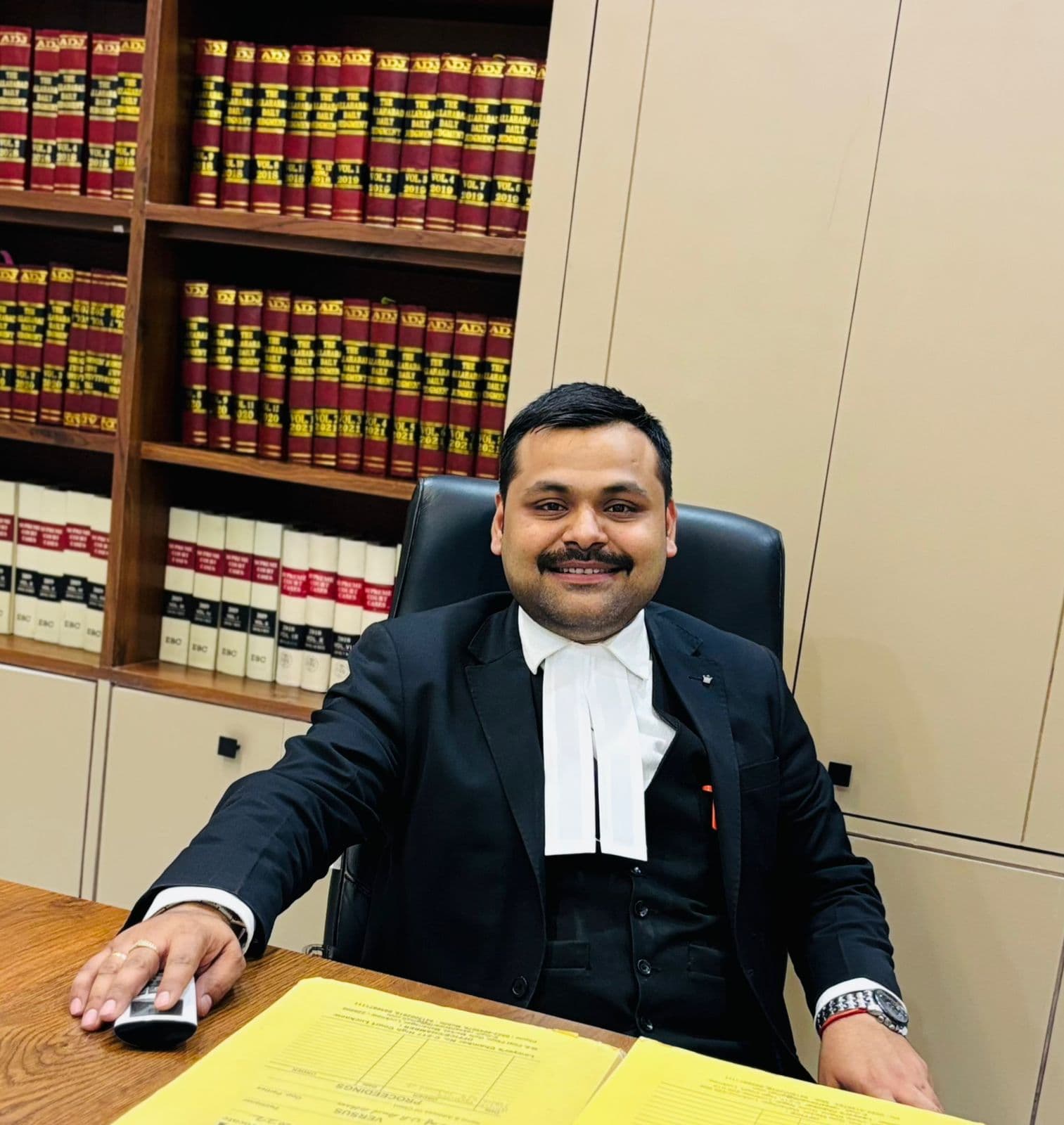
Adv. Jitendra Tiwari
Director
Lucknow & Allahabad
B.A. LL.B. (Hons.)
- Property & Land
- Civil & Criminal Matters
- Revenue Matters
Sumanjari & Co. Advocates represents serving and retired Army, Navy, and Air Force personnel before the Armed Forces Tribunal (AFT), Regional Bench Lucknow (Rafi Ahmed Kidwai Marg, Cantonment) in Original Applications (s.14), Court-Martial Appeals (s.15), disability pension broad-banding, and PCDA (P) execution matters, alongside representing mining lessees before the Directorate of Geology & Mining (Khanij Bhawan, Lucknow), Mining Tribunal, and Allahabad High Court, Lucknow Bench (Chamber Block D-311).
Most service matters require a statutory representation before the Tribunal can be approached, and most mining disputes turn on the lease terms and the authority that passed the impugned order. The eight stages below explain how each type of case actually proceeds.
Adv. Abhishek Mishra leads this practice, supported by Adv. Jitendra Tiwari, Adv. Aditya Narayan Shukla and Adv. Vinod Arya. Each profile below sets out that member's individual practice areas.
Director
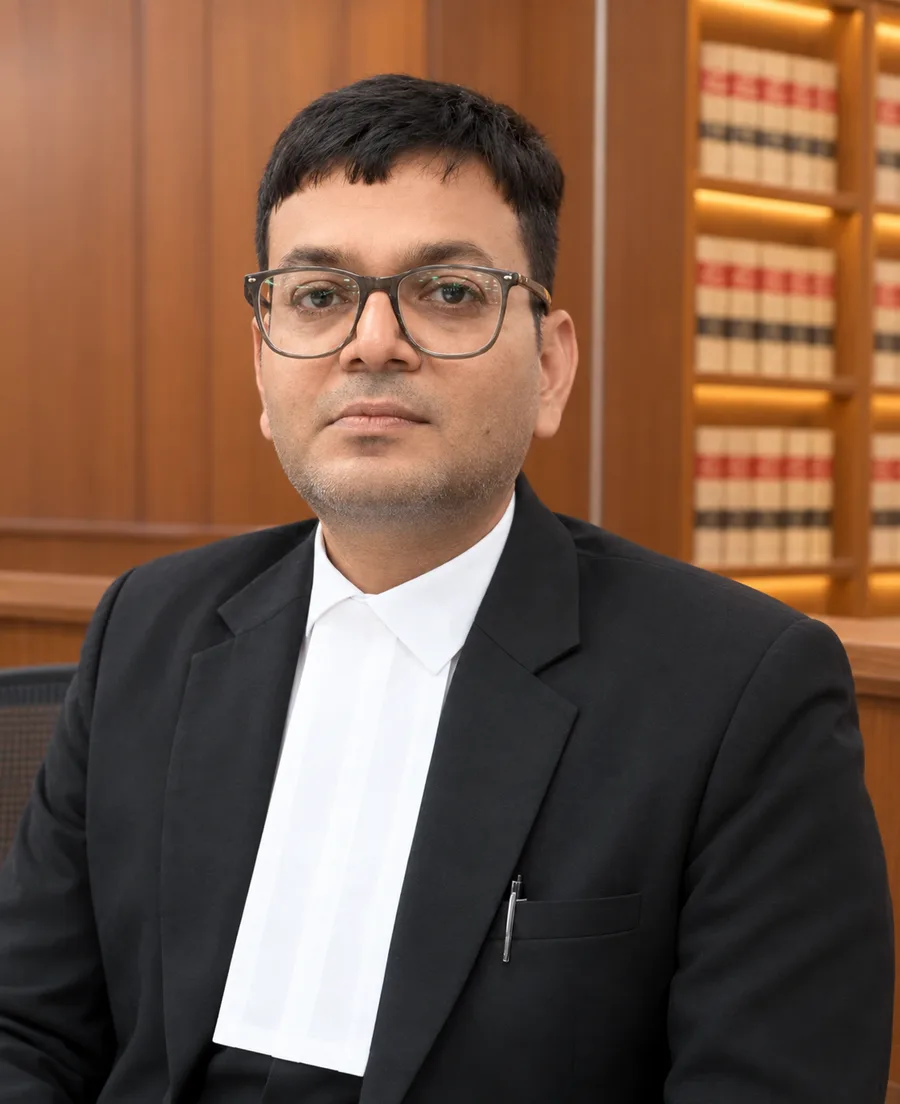
Senior Associate Advocate
Reach our Lucknow team at Shushant Golf City or our chamber at the Allahabad High Court, Lucknow Bench in Gomti Nagar. Please call to confirm the appropriate chamber and arrange your consultation before visiting.
These are distinct practice areas. For an armed forces matter, ask about service records, pension decisions, statutory remedies and AFT jurisdiction. For mining, ask about the lease, permit, royalty demand or enforcement notice and the competent authority or court. Share the relevant orders and proof of receipt before discussing limitation and interim relief. Confirm the advocate handling your subject and fees; neither pension benefits nor lease restoration can be guaranteed.
Sumanjari & Co. Advocates is a second-generation law firm with 30+ years of legal experience and 10,000+ cases solved by its team. Each advocate's individual practice areas are listed on their profile; no outcome is guaranteed.
Serving and retired defence personnel often need to challenge a discharge order, a disability pension assessment, or a court-martial finding, while mining lessees and complainants deal with lease disputes, royalty demands, and illegal-mining notices. Sumanjari & Co. Advocates advises and represents clients in both areas before the Armed Forces Tribunal, Lucknow Bench, the Mining Tribunal, and the Allahabad High Court.
Each matter is assessed on its own facts and record — a service record and medical board file call for a different approach than a mining lease and royalty assessment — and we explain the applicable procedure, limitation, and realistic options before any application is drafted.
Disability and family pension, promotion, discharge, dismissal, and appeals against court-martial findings and sentences.
Mining lease grant, renewal and cancellation disputes, royalty and dead-rent assessment, and illegal-mining complaints before the Tehsildar, SDM and Director of Geology & Mining.
Writ challenges to AFT and mining-authority orders, arguing from our chambers at Block D-311.
Appeals under Section 30/31 of the AFT Act and special leave petitions against High Court orders in mining matters.
The principal statutes governing a service matter before the Armed Forces Tribunal, Lucknow Bench, and a mining dispute arising in Uttar Pradesh.
| Law | Key provisions | Where it matters |
|---|---|---|
| Armed Forces Tribunal Act, 2007 | s.14 (service matters), s.15 (court-martial appeals), s.19 (execution of orders), s.21 (statutory complaint), s.22 (limitation), s.30–31 (appeal to Supreme Court) | Governs disability/family pension, promotion, discharge, dismissal and court-martial appeals before the Lucknow Bench. |
| Pension Regulations for the Army / Navy / Air Force | Entitlement and assessment rules for disability and family pension, attributability and aggravation | Decides whether an injury or illness is attributable to or aggravated by service, and the disability percentage awarded. |
| Mines and Minerals (Development and Regulation) Act, 1957 | Grant, renewal and termination of mining leases; royalty and dead-rent; penalties for illegal mining; revision to the Central Government | Primary central statute governing mining lease and royalty disputes in Uttar Pradesh. |
| UP Minor Mineral (Concession) Rules | State procedure for minor-mineral leases, e-auction, and quarry permits | Applies to sand, gravel, and other minor-mineral leases and permits issued in the Lucknow Division. |
| Environment (Protection) Act, 1986 | Environmental clearance conditions attached to mining operations | Non-compliance with clearance conditions is a common ground for suspension or cancellation of a mining lease. |
| Constitution of India | Art. 226/227 (writ jurisdiction), Art. 136 (special leave to the Supreme Court) | Supervisory and appellate remedies where the AFT Act or MMDR Act does not provide an adequate alternative. |
Challenges to Release Medical Board (RMB) and Invaliding Medical Board (IMB) rejections where illnesses — hypertension, ischemic heart disease, psychiatric conditions, spinal injuries — are labelled "Neither Attributable to Nor Aggravated by Military Service (NANA)", applying the Supreme Court’s presumption principles in Dharamvir Singh v. Union of India and rounding-off / broad-banding of the disability element (20% → 50%, 50% → 75%, 75% → 100%) with arrears and PPO revision execution before PCDA (Pensions) under Section 19 of the AFT Act.
Section 15 appeals against General Court Martial (GCM), District Court Martial (DCM), and Summary Court Martial (SCM) findings and sentences, bail and suspension of sentence during pendency under Section 15(3)/(6), and challenges to administrative discharge under Army Rule 13, Air Force Rule 15, or the Navy Regulations.
Drafting of statutory complaints under Sections 26/27 of the Army Act (and the Navy and Air Force equivalents), and tracking the six-month statutory waiting window under Section 21(1)(b) before the Original Application (OA) is filed at the AFT Lucknow Bench registry.
The AFT Lucknow Bench at Gulistan Colony, Cantonment, Lucknow exercises territorial jurisdiction over all districts of Uttar Pradesh and Uttarakhand for serving and retired defence personnel and families claiming Ordinary, Special, or Liberalized Family Pension.
E-tender and e-auction bid disputes, Letter of Intent (LoI) cancellation challenges, District Survey Report (DSR) and SEIAA environmental-clearance delays affecting lease execution, and Section 30 MMDR Act revision petitions before the Central Government (Mines Tribunal).
Replies to District Magistrate and Mining Officer penalty notices alleging excavation beyond leased coordinates, unblocking of MineMitra portal IDs and e-MM-11 transit pass generation, and Writ-C challenges before the Allahabad High Court, Lucknow Bench against arbitrary lease termination or coercive recovery certificates (RC).
Challenges to royalty and penalty recovery certificates issued under Rules 58 and 60 of the UP Minor Minerals (Concession) Rules, 2021, and reasoned representations before the Directorate of Geology and Mining (DGM), Khanij Bhawan, Lucknow before escalation to the Tribunal or the High Court.
How a service matter moves through the Armed Forces Tribunal, Lucknow Bench, or a mining dispute moves through the Mining Tribunal and the Allahabad High Court, Lucknow Bench.
Stage 1
Forum: Chamber consultation, Lucknow
For a defence-service grievance, we start by reviewing the service record, discharge order, show-cause notice, or Release and Review Medical Board proceedings to identify whether the matter falls within the Armed Forces Tribunal's jurisdiction under Section 14 (service matters) or Section 15 (appeals against a court-martial finding or sentence) of the Armed Forces Tribunal Act, 2007.
For a mining dispute, we review the lease deed, royalty or dead-rent assessment order, or the notice alleging illegal mining, and identify whether the correct route is a representation to the mining authority, an appeal under the Mines and Minerals (Development and Regulation) Act, 1957, or a writ petition before the Allahabad High Court, Lucknow Bench.
Key provisions: Section 14, Armed Forces Tribunal Act, 2007; Section 15, Armed Forces Tribunal Act, 2007
Stage 2
Forum: Service Headquarters / Mining Officer, Lucknow Division
Section 21 of the Armed Forces Tribunal Act ordinarily requires a statutory complaint or representation to the competent service authority before an Original Application (OA) can be filed; the OA follows only after the representation is rejected, or after the prescribed period lapses without a decision. Keeping dated proof of despatch is important for the limitation argument later.
In mining matters, a representation to the Mining Officer, the District Magistrate, or the Director of Geology and Mining, Uttar Pradesh, depending on the issue, is often a practical first step before a formal legal challenge, and helps place the department on notice of the dispute.
Key provisions: Section 21, Armed Forces Tribunal Act, 2007
Stage 3
Forum: Chamber drafting, Lucknow
The OA before the Armed Forces Tribunal sets out the facts, the grounds of challenge, and the specific relief sought — such as reinstatement, revision of disability pension, or quashing of a court-martial finding — supported by a sworn affidavit and the service documents relied upon.
A mining petition similarly sets out the lease terms, the impugned action, and the relief sought, whether quashing a cancellation order, restraining illegal extraction by a rival party, or correcting a royalty assessment, annexed with the lease deed and correspondence on record.
Key provisions: Armed Forces Tribunal (Procedure) Rules, 2008
Stage 4
Forum: Armed Forces Tribunal, Lucknow Bench / Mining Tribunal or Allahabad High Court, Lucknow Bench
The OA is filed at the Armed Forces Tribunal's Lucknow Bench registry with the prescribed fee and the required number of copies. The registry checks limitation under Section 22 of the Act and formal compliance with the Procedure Rules before registering the case for hearing.
Mining disputes are filed before the forum appropriate to the order under challenge — the state-constituted Mining Tribunal, in revision to the Central Government under the MMDR Act, or as a writ petition before the Allahabad High Court, Lucknow Bench, where no statutory appellate remedy is available or adequate.
Key provisions: Section 22, Armed Forces Tribunal Act, 2007 (limitation)
Stage 5
Forum: Armed Forces Tribunal, Lucknow Bench / Mining Tribunal / Allahabad High Court, Lucknow Bench
Interim relief — such as a stay on a discharge or dismissal order, continuation of pension payments pending the OA, or a restraint on disputed mining operations — can be sought where the applicant shows a prima facie case and that the balance of convenience favours interim protection.
In mining disputes involving ongoing extraction, interim relief is often time-sensitive, and the application should be moved promptly alongside, rather than after, the main petition.
Key provisions: Armed Forces Tribunal (Procedure) Rules, 2008
Stage 6
Forum: Armed Forces Tribunal, Lucknow Bench / Mining Tribunal
Once admitted, notice is issued to the respondents — typically the Union of India through the concerned service headquarters, or the mining department and any opposing lessee — who file a reply or counter affidavit, to which a rejoinder may be filed in response.
At hearing, both sides argue on the pleadings and the record; the Tribunal may call for the original service record or mining file where necessary, and written submissions are often invited alongside oral arguments, particularly where disability-pension medical findings or lease terms are contested.
Key provisions: Armed Forces Tribunal (Procedure) Rules, 2008
Stage 7
Forum: Armed Forces Tribunal, Lucknow Bench / PCDA (Pension) / Mining Department
The Tribunal passes a reasoned order allowing, partly allowing, or dismissing the OA or petition — for instance, directing a revised disability-pension percentage, quashing a discharge order, or setting aside a lease-cancellation order. A certified copy should be obtained promptly from the registry.
Where the order directs an authority to act, compliance can be monitored, and a contempt or execution application filed under Section 19 of the Act if directions are not honoured within the time given; for pension matters, this often means following up with the Principal Controller of Defence Accounts (Pension) to confirm the revised amount is actually credited.
Key provisions: Section 19, Armed Forces Tribunal Act, 2007; Section 31, Armed Forces Tribunal Act, 2007
Stage 8
Forum: Supreme Court of India
An appeal against an order of the Armed Forces Tribunal lies to the Supreme Court under Section 30, generally where it involves a substantial question of law of general public importance, and under Section 31 with the Tribunal's or the Supreme Court's leave in other cases.
Mining Tribunal or High Court orders can likewise be challenged by special leave under Article 136 of the Constitution; limitation runs from the date of judgment and should be checked immediately against the certified copy before deciding on a further appeal.
Key provisions: Section 30, Armed Forces Tribunal Act, 2007; Section 31, Armed Forces Tribunal Act, 2007; Article 136, Constitution of India
Ask about the proposed scope of work, professional fees, filing expenses, and who will appear. Related revenue and property questions are covered in our property law practice.
This page provides general information, not advice on an individual case. Relief depends on the facts, applicable law, and the forum concerned; no result or timeline is guaranteed.
Common questions clients bring to us about defence-service and mining matters in Lucknow.
The AFT handles service matters of Army, Navy and Air Force personnel — disability and family pension, promotion, discharge, and dismissal — and appeals against the findings or sentence of a court martial, under Sections 14 and 15 of the Armed Forces Tribunal Act, 2007.
Ask Us About This →In most service matters, yes. Section 21 of the Act ordinarily requires a representation to the competent authority first, and the Original Application can be filed only after it is rejected or the prescribed period lapses without a decision.
Ask Us About This →The Lucknow Bench of the Armed Forces Tribunal has jurisdiction over service matters arising in Uttar Pradesh and Uttarakhand. Appeals against its orders lie to the Supreme Court under Sections 30 and 31 of the Act.
Ask Us About This →Depending on the order, it may go before the state Mining Tribunal, in revision to the Central Government under the Mines and Minerals (Development and Regulation) Act, 1957, or as a writ petition before the Allahabad High Court, Lucknow Bench.
Ask Us About This →Yes, an assessment order can be challenged through the statutory appellate route under the MMDR Act or the applicable UP Minor Mineral Rules; the correct forum depends on the mineral and the authority that passed the order.
Ask Us About This →Yes, including challenges to Release and Review Medical Board findings on attributability, aggravation, and disability percentage, and claims for broad-banding where applicable.
Ask Us About This →Applying the Supreme Court’s ruling in Union of India v. Ram Avtar, disability elements below 50% are rounded up — 20% to 50%, 50% to 75%, and 75% to 100% — for qualifying personnel. We seek broad-banding with arrears and PPO revision in the Original Application, and pursue execution before PCDA (Pensions) under Section 19 of the AFT Act if the revised pension is not credited.
Ask Us About This →Section 22 prescribes the limitation window for an Original Application, counted from the final rejection of the statutory complaint or the cause of action. The Tribunal may condone delay on sufficient cause, and continuing wrongs such as pension underpayment are treated as recurring causes of action — we assess limitation at the first review of the service record.
Ask Us About This →A DM or Mining Officer penalty for alleged excavation beyond leased coordinates can be challenged through the statutory appellate/revision route under the 2021 Rules and the MMDR Act, 1957, while blockage of MineMitra portal IDs or e-MM-11 transit passes can be challenged by representation and, where coercive recovery follows, a Writ-C petition before the Allahabad High Court, Lucknow Bench.
Ask Us About This →Under L. Chandra Kumar v. Union of India, tribunal orders remain amenable to judicial review under Articles 226/227 before the jurisdictional High Court, even though Sections 30–31 of the AFT Act provide a statutory appeal to the Supreme Court on points of law. The correct route depends on the grounds raised — we evaluate both before advising.
Ask Us About This →Short reads on defence-service pension matters, service law, and revenue and mining recovery disputes.
A step-by-step legal guide to challenging unlawful suspension orders and departmental charge sheets in India.
Read Article →CONTESTED MUTATIONS, UNREGISTERED WILLS & SDM APPEALS
Read Article →INQUIRIES, DISMISSAL PROTECTIONS & ARTICLE 311(2) EXCEPTIONS
Read Article →CO-TENURE DIVISION, PRELIMINARY DECREES & KURRAS RULES
Read Article →RULE 7 UP CCA RULES 1999 & VAGUE CHARGE SHEETS
Read Article →FIELD BOUNDARY DISPUTES, SEHADDA POINTS & KANUNGO REPORTS
Read Article →AJAY KUMAR CHOUDHARY 90-DAY RULE & ALLOWANCE ARREARS
Read Article →RC FORM 20 DEFENSE, TALAB/RASTA LAND & SECTION 67(5) APPEALS
Read Article →Speak with our team about your pension, discharge, court-martial appeal, or mining lease dispute — practising before the Armed Forces Tribunal, Lucknow Bench and the Allahabad High Court.
Sumanjari & Co. Advocates
30+ years of firm-wide legal experience across practice areas.Each matter is assessed on its own facts and applicable law.