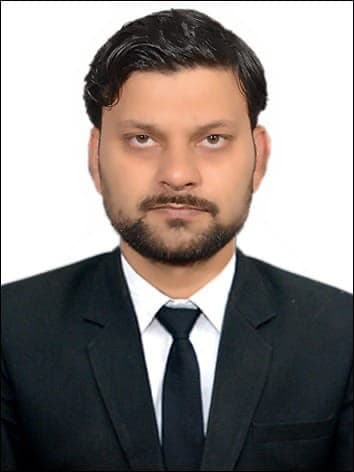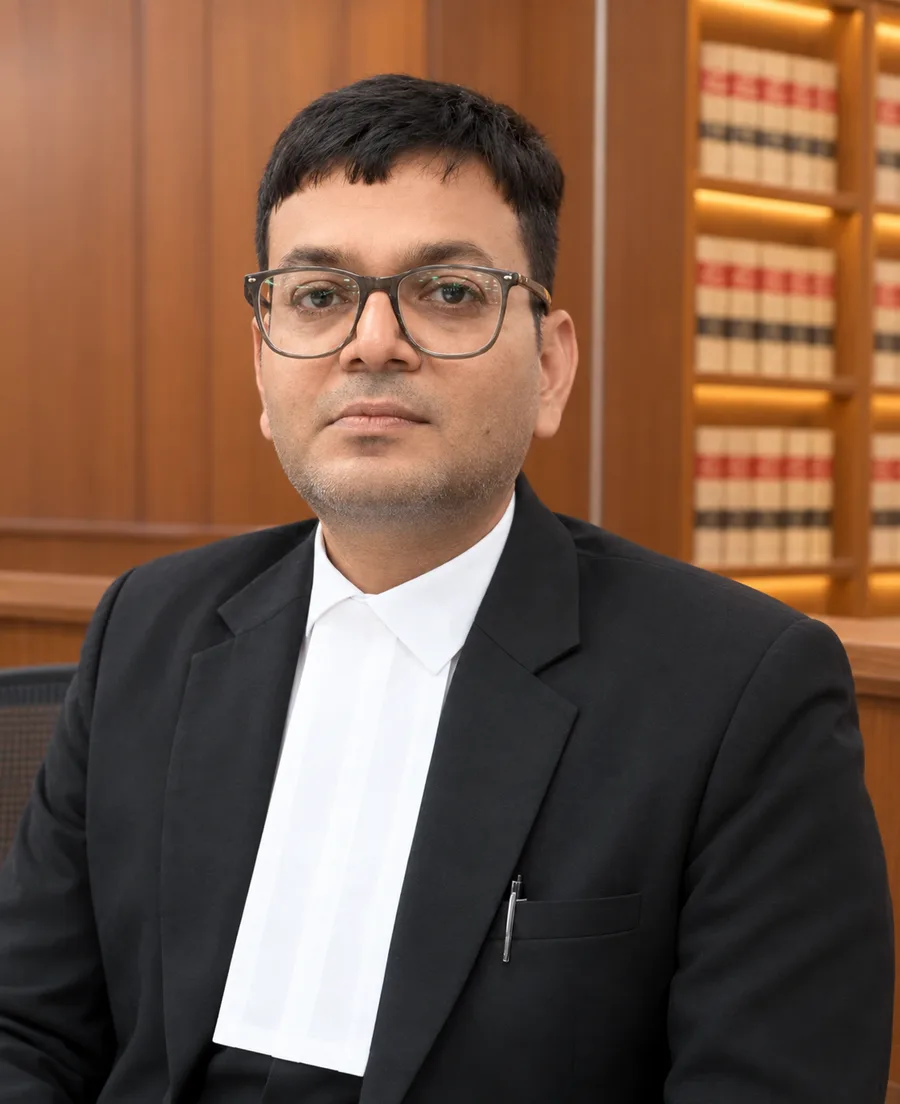
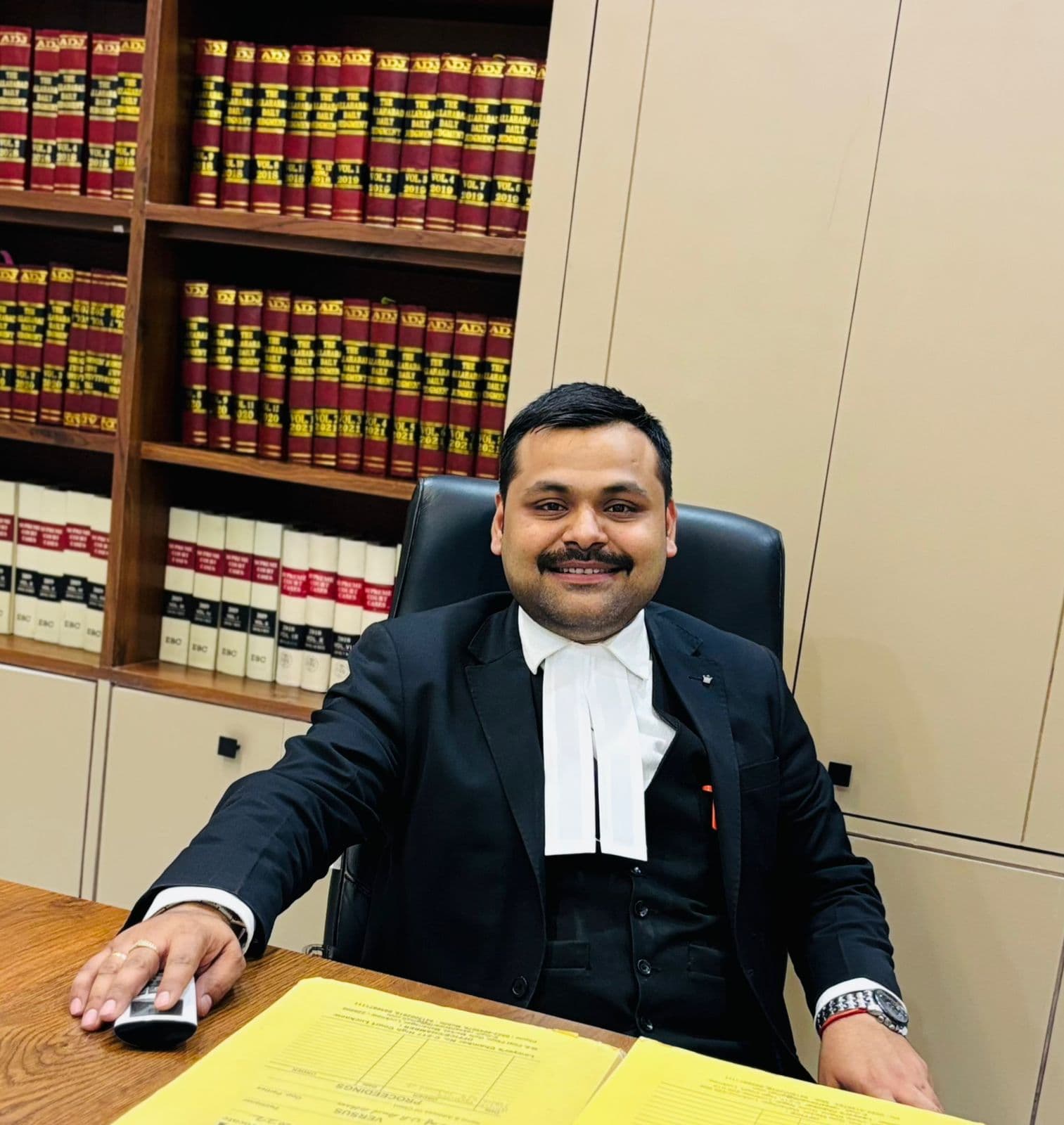
Adv. Jitendra Tiwari
Director
Lucknow & Allahabad
B.A. LL.B. (Hons.)
- Property & Land
- Civil & Criminal Matters
- Revenue Matters
Facing an FIR, a police notice, or an arrest in Lucknow? Our criminal lawyers and advocates advise on regular and anticipatory bail, FIR and chargesheet quashing, criminal trial defence, and appeals before the District & Sessions Courts, Lucknow, and the Allahabad High Court, Lucknow Bench.
In Lucknow, a criminal case usually moves from FIR or complaint at a police station under the Lucknow Police Commissionerate, through bail and remand before the Magistrate and Sessions Courts at the Civil Court, Kaiserbagh, to trial and appeal. Quashing, anticipatory bail and appeals can be taken to the Allahabad High Court, Lucknow Bench at Gomti Nagar. The ten stages below explain each step.
Adv. Aditya Narayan Shukla leads our criminal law practice alongside Adv. Jitendra Tiwari, Adv. Abhishek Mishra, Adv. Shishir Pandey and Adv. Priyesh Dwivedi. Each profile below sets out that member's individual practice areas.
Director

Associate Advocate
Associate Advocate
Reach our Lucknow team at Shushant Golf City or our chamber at the Allahabad High Court, Lucknow Bench in Gomti Nagar. Please call to confirm the appropriate chamber and arrange your consultation before visiting.
Choose according to the alleged offence, custody status and court involved. Ask about regular or anticipatory bail, FIR review, trial preparation and maintainable High Court remedies. Share the FIR, notices and prior orders so an advocate can identify urgent deadlines and explain risks. Confirm who handles hearings and the fee scope. Claims of guaranteed bail, FIR quashing or acquittal are not a reliable basis for choosing a criminal lawyer.
Sumanjari & Co. Advocates is a second-generation law firm with 30+ years of legal experience and 10,000+ cases solved by its team. Each advocate's individual practice areas are listed on their profile; no outcome is guaranteed.
A criminal case can move quickly, and the steps taken in the first few days — at the time of an FIR, arrest, or notice — often shape the outcome. Sumanjari & Co. Advocates advises and represents individuals from the investigation stage through trial, appeal, and revision, under the Bharatiya Nyaya Sanhita (BNS), the Bharatiya Nagarik Suraksha Sanhita (BNSS), and the Bharatiya Sakshya Adhiniyam (BSA).
Whether the matter involves an FIR you wish to have quashed, a bail application, a criminal trial, or an appeal against conviction or acquittal, we prepare each case with careful attention to evidence, procedure, and strategy — and represent you with the same care before the District & Sessions Courts and in appeal before the Allahabad High Court, Lucknow Bench.
Advice from the point of an FIR or complaint, including representation on arrest, remand, and custody applications.
Bail applications and trial representation before the Magistrate and Sessions Courts.
FIR quashing, anticipatory bail, appeals, and revisions, arguing from our chambers at Block D-311.
Matters before special courts constituted for NI Act, NDPS, and other special-statute offences.
The codes and special statutes that govern a criminal case moving through Lucknow's police stations, the Civil Court at Kaiserbagh, and the Allahabad High Court, Lucknow Bench.
| Law | Key provisions | Where it matters |
|---|---|---|
| Bharatiya Nyaya Sanhita, 2023 (BNS), replacing the IPC | s.85–86 (cruelty by husband/relatives, formerly 498A IPC), s.318 (cheating, formerly 420), s.316 (criminal breach of trust, formerly 406) | Decides what offence the FIR alleges, whether it is cognizable/bailable, and the maximum punishment, which drives arrest and bail strategy. |
| Bharatiya Nagarik Suraksha Sanhita, 2023 (BNSS), replacing the CrPC | s.35, 47, 48, 58, 173, 175(3), 187, 193, 250–251, 258, 351, 415, 430, 438–442, 479–483, 528 | Procedure from FIR to appeal before the Lucknow Magistrate and Sessions Courts and the Lucknow Bench. |
| Bharatiya Sakshya Adhiniyam, 2023 (BSA), replacing the Evidence Act | s.63 (electronic records certificate, formerly s.65B) | Admissibility of CCTV, call records, WhatsApp chats and other digital evidence at trial. |
| Constitution of India | Art. 21, Art. 22, Art. 226, Art. 227, Art. 136 | Liberty, arrest safeguards, writ petitions to quash FIRs at the Lucknow Bench, and SLP to the Supreme Court. |
| Negotiable Instruments Act, 1881 | s.138, 141, 142, 143A, 148 | Cheque-bounce complaints in Lucknow Magistrate courts; interim compensation; deposit on appeal. |
| Special statutes | NDPS Act 1985, POCSO Act 2012, SC/ST (PoA) Act 1989, Prevention of Corruption Act 1988, IT Act 2000, Dowry Prohibition Act 1961, UP Gangsters Act 1986 | Trials before designated Special Courts at the Civil Court, Lucknow, with special bail conditions. |
BNS, BNSS and BSA apply from 1 July 2024. FIRs and proceedings begun earlier generally continue under the IPC, CrPC and Evidence Act per Section 531 BNSS. The date of the offence and of registration decide which code applies.
The remedies our criminal lawyers invoke most often in Lucknow, mapped from the repealed codes to the Bharatiya Nagarik Suraksha Sanhita, 2023, with the forum where each is heard.
| Remedy | CrPC → BNSS Mapping | Forum in Lucknow |
|---|---|---|
| Anticipatory Bail | Section 438 CrPC → Section 482 BNSS, 2023 | Sessions Court, Lucknow & Allahabad High Court, Lucknow Bench (Ankit Bharti v. State of U.P. Full Bench criteria for direct High Court filing). |
| Regular Bail & Default Statutory Bail | Section 437/439 & 167(2) CrPC → Section 480/483 & 187(3) BNSS, 2023 | CJM/Magistrate Court, Sessions Court (Kaiserbagh), High Court Lucknow Bench (60/90-day default bail on incomplete investigation). |
| Quashing of FIR, Chargesheet & Summoning Order | Section 482 CrPC & Art. 226 → Section 528 BNSS, 2023 & Art. 226 | Division Bench (Criminal Misc. Writ pre-chargesheet) & Single Judge (Section 528 BNSS post-chargesheet/cognizance) at Lucknow Bench. |
| Notice of Appearance Before Arrest (offences ≤ 7 years) | Section 41A CrPC → Section 35(3) BNSS, 2023 | Mandatory police notice safeguard under Arnesh Kumar v. State of Bihar and Satender Kumar Antil v. CBI. |
| Discharge Before Framing of Charge | Section 227/239/245 CrPC → Section 250/262/268 BNSS, 2023 | Sessions Court & Magistrate Court, Lucknow. |
| Criminal Appeals & Suspension of Sentence | Section 374 & 389 CrPC → Section 415 & 430 BNSS, 2023 | Sessions Court & Allahabad High Court, Lucknow Bench. |
Special-statute prosecutions carry reverse burdens, statutory presumptions and stringent bail conditions that ordinary defence strategy does not address. Our team appears before the designated Special Courts in Lucknow and the Allahabad High Court, Lucknow Bench in these matters.
We challenge defective Gang Charts prepared under the U.P. Gangsters and Anti-Social Activities (Prevention) Rules, 2021, move bail applications under Section 19(4) of the Gangsters Act, and defend against District Magistrate property attachment under Section 14(1). We also contest externment orders passed under the U.P. Control of Goondas Act, 1970.
Defence before the Special Courts involves the Section 37 NDPS twin conditions and the small, intermediate and commercial quantity distinctions; testing the statutory presumption under Section 29 of the POCSO Act through cross-examination; and statutory criminal appeals under Section 14A of the SC/ST (Prevention of Atrocities) Act before the Allahabad High Court, Lucknow Bench.
Led by Adv. Aditya Narayan Shukla and Adv. Shishir Pandey, we represent public servants, executives and businesses before the Special Judge (CBI/PMLA/Anti-Corruption), Lucknow — covering Prevention of Corruption Act prosecutions, CBI investigations, and Enforcement Directorate PMLA proceedings, including bail and attachment challenges.
We move quickly once instructed — reviewing the FIR, charge sheet, or notice, and advising you clearly on your rights and the options available at that stage. We prepare bail applications without delay, build a considered defence strategy for trial, and are fully prepared to pursue quashing, appeal, or revision before the Allahabad High Court, Lucknow Bench, where warranted.
Bring what is available; do not delay seeking advice about an arrest or imminent hearing just because the file is incomplete.
We review your role in the case, the alleged offences, custody status, earlier orders, and immediate deadlines. This helps distinguish a bail application from a discharge request, quashing petition, trial defence, or appeal. The court with jurisdiction must be identified before selecting a remedy.
Ask about the proposed scope of work, professional fees, filing expenses, and who will appear. For matters involving electronic evidence, see our cybercrime legal services. Related matrimonial issues are covered in our family and matrimonial practice.
This page provides general information, not advice on an individual case. Relief depends on the facts, applicable law, and the court; no result or timeline is guaranteed.
How a criminal case actually moves through Lucknow's police stations, the Civil Court at Kaiserbagh and the Allahabad High Court, Lucknow Bench, with the BNSS provisions that govern each step.
Stage 1
Forum: Police stations under the Lucknow Police Commissionerate; Magistrate courts at the Civil Court, Kaiserbagh
Most criminal cases in Lucknow begin at a police station of the Lucknow Police Commissionerate. Information about a cognizable offence must be recorded as an FIR under Section 173 BNSS (formerly Section 154 CrPC). It can be given at any police station as a "zero FIR", or electronically, and must be signed within three days if sent online.
For offences punishable with three to seven years, the police may first hold a preliminary enquiry of up to 14 days with the permission of a DSP-rank officer. If the police station refuses to register, the complainant can write to the Deputy Commissioner of Police under Section 173(4). After that, the complainant can apply to the Magistrate at the Civil Court, Kaiserbagh under Section 175(3), supported by an affidavit.
If you are named in an FIR, do not contact the complainant or witnesses. Obtain a copy of the FIR from the UP Police citizen portal (UPCOP) or the police station, and get advice before giving any statement.
Key provisions: Section 173 BNSS (formerly s.154 CrPC); Section 173(3) and 173(4) BNSS; Section 175(3) BNSS (formerly s.156(3) CrPC); Section 223 BNSS (private complaint)
Stage 2
Forum: Investigating police station, Lucknow Police Commissionerate
For offences punishable with up to seven years, investigating officers at the concerned police station under the Lucknow Police Commissionerate must ordinarily issue a notice of appearance under Section 35(3) BNSS (formerly Section 41A CrPC) instead of making an arrest. The Supreme Court's guidelines in Arnesh Kumar v. State of Bihar (2014) require the police to record reasons before arresting in such cases, and non-compliance can itself support a bail application. Section 35(7) additionally bars arrest without a DSP-rank officer's permission for offences carrying under three years where the person is infirm or over sixty.
During this stage the investigating officer records statements of witnesses and the complainant under Section 180 BNSS (formerly Section 161 CrPC), and may seek a statement on oath before a Magistrate under Section 183 BNSS (formerly Section 164 CrPC) to preserve testimony early. For offences carrying seven years or more, a forensic team's visit to the scene is mandated under Section 176(3) BNSS, and search and seizure must ordinarily be audio-video recorded under Section 105 BNSS — a safeguard worth checking where the investigation record is challenged later.
In complaints of cruelty under Section 85 BNS (formerly Section 498A IPC), the Allahabad High Court in Mukesh Bansal v. State of U.P. (2022) directed a two-month cooling-off period and referral to a Family Welfare Committee before arrest, a protection the Supreme Court endorsed in Shivangi Bansal v. Sahib Bansal (2025). Confirm the current operational status of Family Welfare Committees in Lucknow before relying on this safeguard.
Key provisions: Section 35(3) BNSS (formerly s.41A CrPC); Section 35(7) BNSS; Section 180 BNSS (formerly s.161 CrPC); Section 183 BNSS (formerly s.164 CrPC); Section 176(3) BNSS; Section 105 BNSS
Stage 3
Forum: Sessions Court, Civil Court, Kaiserbagh; Allahabad High Court, Lucknow Bench, Gomti Nagar
Anticipatory bail under Section 482 BNSS (formerly Section 438 CrPC) allows a person apprehending arrest for a non-bailable offence to seek a direction for release in advance. In Uttar Pradesh this remedy has a particular history: it was withdrawn from 1976 and restored only when the CrPC (Uttar Pradesh Amendment) Act, 2018 took effect in June 2019. Applications are heard by the Sessions Court at the Civil Court, Kaiserbagh, and by the Allahabad High Court, Lucknow Bench, at Gomti Nagar, which have concurrent jurisdiction.
Ordinarily, an applicant approaches the Sessions Court first and moves the Lucknow Bench only if relief is refused or urgent circumstances justify a direct application; this is a practice, not a fixed rule, and each case must be assessed on its facts. Conditions such as cooperation with investigation, surrender of a passport, or restrictions on contacting witnesses are commonly attached and must be honoured strictly.
Separately, where an FIR itself is flawed, a Criminal Misc. Writ Petition under Article 226 can be filed at the Lucknow Bench to quash the FIR or restrain coercive action while investigation is pending — a route distinct from anticipatory bail and from the post-chargesheet remedy under Section 528 BNSS at Stage 7. The grounds recognised in State of Haryana v. Bhajan Lal (1992), such as allegations that do not disclose any offence, continue to guide both remedies.
Key provisions: Section 482 BNSS (formerly s.438 CrPC); Article 226, Constitution of India; CrPC (Uttar Pradesh Amendment) Act, 2018
Stage 4
Forum: Remand / duty Magistrate, Civil Court, Lucknow
On arrest, Section 47 BNSS (formerly Section 50 CrPC) entitles the person to be told the grounds of arrest and, in a bailable offence, of the right to bail. Section 48 BNSS (formerly Section 50A) requires the police to inform a relative or friend of the arrest and place of custody. The arrested person must be produced before the nearest Magistrate at the Civil Court, Lucknow within twenty-four hours, excluding travel time, under Section 58 BNSS (formerly Section 57 CrPC).
The remand Magistrate can authorise police or judicial custody under Section 187 BNSS (formerly Section 167 CrPC). Police custody is capped at fifteen days in total, which may now be sought in parts within the first forty or sixty days of the overall investigation period depending on the offence. If the police fail to file a report within sixty days (offences under ten years) or ninety days (graver offences), the accused acquires a right to default bail under Section 187(3), which must be claimed promptly once it accrues.
Anyone unable to afford a lawyer at this stage can seek free legal aid through the District Legal Services Authority, Lucknow, and the duty remand advocate posted at the Civil Court. Do not sign any document or make a statement to the police without understanding its contents and consequences.
Key provisions: Section 47 BNSS (formerly s.50 CrPC); Section 48 BNSS (formerly s.50A CrPC); Section 58 BNSS (formerly s.57 CrPC); Section 187 BNSS (formerly s.167 CrPC)
Stage 5
Forum: Magistrate and Sessions Court, Civil Court, Kaiserbagh; Allahabad High Court, Lucknow Bench
A person in custody may apply for regular bail before the Magistrate under Section 480 BNSS (formerly Section 437 CrPC) for offences within Magistrate jurisdiction, or before the Sessions Court and the Allahabad High Court, Lucknow Bench under Section 483 BNSS (formerly Section 439 CrPC) for graver offences. Lucknow practice ordinarily expects an application before the Magistrate or Sessions Court at the Civil Court, Kaiserbagh, before a bail application is carried to the Lucknow Bench, though urgent cases may justify approaching the High Court directly.
For first-time offenders who are undertrials, Section 479 BNSS (formerly Section 436A CrPC) entitles release on bail after detention for one-third of the maximum sentence prescribed for the offence, subject to the court's discretion in serious cases. The guidelines in Satender Kumar Antil v. CBI (2022) emphasise that bail, not jail, is the norm once investigation is complete.
Bail is granted subject to sureties and a bail bond, with conditions that can include surrender of travel documents and restrictions on leaving the district without permission. Special statutes such as the NDPS Act (Section 37) and the UAPA impose stricter thresholds before bail can be granted, and these bars must be checked before assuming ordinary bail principles will apply.
Key provisions: Section 480 BNSS (formerly s.437 CrPC); Section 483 BNSS (formerly s.439 CrPC); Section 479 BNSS (formerly s.436A CrPC)
Stage 6
Forum: Concerned Magistrate court, Civil Court, Lucknow
On completing investigation, the police file a report under Section 193 BNSS (formerly Section 173 CrPC) before the concerned Magistrate at the Civil Court, Lucknow — either a chargesheet recommending prosecution or a closure report. Section 193(3)(ii) requires the informant to be kept updated on the progress of investigation within ninety days, a safeguard that is often overlooked and worth actively asserting.
Where the police file a closure report, the complainant can file a protest petition objecting to the closure and asking the Magistrate to take cognizance regardless. Further investigation after a report is filed is permitted under Section 193(9) and should ordinarily be completed within ninety days unless the court extends time for reasons recorded.
Once a chargesheet is filed, the accused is entitled to copies of the chargesheet and the material relied upon under Section 230 BNSS, which should be reviewed carefully before the next hearing to identify gaps, delay, or procedural lapses that may support discharge or quashing later.
Key provisions: Section 193 BNSS (formerly s.173 CrPC); Section 193(3)(ii) BNSS; Section 193(9) BNSS; Section 230 BNSS
Stage 7
Forum: Magistrate court, Civil Court, Lucknow; Allahabad High Court, Lucknow Bench
On receiving the police report, the Magistrate at the Civil Court, Lucknow decides whether to take cognizance of the offence under Section 210 BNSS (formerly Section 190 CrPC); where the case began on a private complaint, the proviso to Section 223 requires the accused to be given a hearing before cognizance is taken. If the Magistrate proceeds, summons are issued under Section 227 BNSS, directing the accused's appearance.
A chargesheet, summoning order, or the proceedings themselves can be challenged at the Allahabad High Court, Lucknow Bench through an application under Section 528 BNSS (formerly Section 482 CrPC), the inherent-powers provision, or through a criminal revision under Sections 438–442 against orders that are revisable. These are distinct from the writ remedy under Article 226 described at Stage 3, which is typically used while investigation is still pending rather than after a chargesheet or summoning order.
In private and matrimonial disputes that have been compromised, the Lucknow Bench can quash proceedings in the interests of justice, following the guidance in Gian Singh v. State of Punjab (2012) and Narinder Singh v. State of Punjab (2014), though quashing on settlement is granted more readily in predominantly civil disputes than in heinous or non-compoundable offences.
Key provisions: Section 210 BNSS (formerly s.190 CrPC); Section 223 BNSS proviso; Section 227 BNSS (formerly s.204 CrPC); Section 528 BNSS (formerly s.482 CrPC); Sections 438–442 BNSS (revision)
Stage 8
Forum: Sessions Court and Special Courts, Civil Court, Lucknow; Magistrate for warrant cases
In sessions-triable cases, after committal from the Magistrate, the accused may apply for discharge under Section 250 BNSS (formerly Section 227 CrPC), ordinarily within sixty days of the date of commitment, on the ground that the material on record does not make out a case. If the court is not satisfied that grounds for discharge exist, charges are framed under Section 251 BNSS (formerly Section 228 CrPC) and the trial proceeds.
In warrant cases triable by a Magistrate, the equivalent stages are discharge under Section 262 BNSS (formerly Section 239 CrPC) and framing of charge under Section 263 BNSS (formerly Section 240 CrPC). Special categories of offences — including those under the POCSO Act, the SC/ST (Prevention of Atrocities) Act, the NDPS Act, the Prevention of Corruption Act, and cases against public representatives — are tried by Special Courts constituted at the Civil Court, Lucknow.
Confirm the current designation and location of each Special Court before citing a specific courtroom to a client, as designations are revised periodically by the High Court administration.
Key provisions: Section 250 BNSS (formerly s.227 CrPC); Section 251 BNSS (formerly s.228 CrPC); Section 262 BNSS (formerly s.239 CrPC); Section 263 BNSS (formerly s.240 CrPC)
Stage 9
Forum: Trial court, Civil Court, Kaiserbagh
Trial before the designated court at the Civil Court, Kaiserbagh begins with the prosecution leading evidence through its witnesses, who are cross-examined on behalf of the accused. Electronic records such as CCTV footage, call detail records, and messages require a certificate under Section 63 of the Bharatiya Sakshya Adhiniyam (formerly Section 65B of the Evidence Act) before they can be read in evidence — the absence of this certificate is a common, avoidable ground of objection.
After prosecution evidence closes, the accused is examined under Section 351 BNSS (formerly Section 313 CrPC) to explain incriminating circumstances, followed by any defence evidence the accused chooses to lead. Trial in electronic mode, including evidence by video-conference, is permitted under Section 530 BNSS, and a court may proceed in absentia against a proclaimed offender under Section 356 where the accused has absconded despite process.
Once arguments conclude, Section 258 BNSS directs that judgment in a Sessions trial ordinarily follow within thirty days, extendable to forty-five days for reasons recorded — a timeline that is directory rather than an entitlement either side can enforce. A victim has an independent right to be heard on sentence and on any compromise, which courts are expected to respect.
Key provisions: Section 63, Bharatiya Sakshya Adhiniyam (formerly s.65B Evidence Act); Section 351 BNSS (formerly s.313 CrPC); Section 530 BNSS; Section 356 BNSS (formerly s.299 CrPC); Section 258 BNSS
Stage 10
Forum: Sessions Court; Allahabad High Court, Lucknow Bench; Supreme Court of India
Judgment is pronounced under Section 392 BNSS, followed, on conviction, by a separate hearing on sentence that may consider probation instead of imprisonment for appropriate first offences. A convicted person may appeal under Section 415 BNSS (formerly Section 374 CrPC) — to the Sessions Court against a Magistrate's conviction, or to the Allahabad High Court, Lucknow Bench against a Sessions Court conviction — and a victim has an independent right of appeal under Section 413 BNSS against acquittal or inadequate compensation.
Pending appeal, Section 430 BNSS (formerly Section 389 CrPC) allows the appellate court to suspend the sentence and release the appellant on bail; this must be applied for separately and is not automatic merely because an appeal has been filed. Orders that are not independently appealable may still be challenged through a criminal revision under Sections 438–442, and a further appeal from the Lucknow Bench lies to the Supreme Court of India by special leave under Article 136.
Limitation for filing an appeal runs from the date of judgment and must be checked immediately with the certified copy obtained from the Copying Section of the court concerned; do not assume a standard number of days without confirming the applicable provision for the specific order and forum.
Key provisions: Section 392 BNSS; Section 415 BNSS (formerly s.374 CrPC); Section 413 BNSS; Section 430 BNSS (formerly s.389 CrPC); Sections 438–442 BNSS (revision); Article 136, Constitution of India
A cheque-bounce complaint follows its own track outside the ten stages above. After the bank returns a cheque unpaid, a legal notice must be sent within 30 days of the return memo, demanding payment within 15 days. If payment is not made, the complaint must be filed before a Magistrate court at the Civil Court, Lucknow within one month after that window closes, under Section 142 of the Negotiable Instruments Act.
The court can order interim compensation of up to 20% of the cheque amount under Section 143A, and an appellant against conviction must ordinarily deposit at least 20% of the compensation or fine awarded under Section 148 before the appeal is heard. The offence is compoundable, and many disputes settle once notice is served.
Common questions clients bring to us — drawn from our criminal law practice in Lucknow.
Do not ignore a police notice or court summons. Preserve it, note the FIR number and police station, and seek advice about the required response. If arrested, ask for the grounds of arrest and access to a lawyer, and request that a relative or friend be informed. Do not destroy evidence or attempt to influence witnesses.
Ask Us About This →Regular bail is sought after arrest or surrender. Anticipatory bail under Section 482 BNSS is a request to the Sessions Court or High Court for release on bail in the event of arrest for a non-bailable offence. Availability, conditions, and restrictions depend on the allegations and applicable law; neither an application nor a consultation guarantees protection.
Ask Us About This →The High Court can consider quashing where the legal grounds justify intervention, for example where the allegations do not disclose an offence or the proceedings amount to an abuse of process. The petition route depends on the stage and relief sought. Territorial jurisdiction must also be checked. A settlement does not automatically end a case, particularly one involving serious offences.
Ask Us About This →Yes, if the requirements of Section 138 of the Negotiable Instruments Act are met, including a legally enforceable debt or liability, a timely demand notice, and non-payment within the statutory period. Bring the cheque, bank return memo, notice, delivery proof, and transaction records so limitation and available defences can be checked.
Ask Us About This →Filing a chargesheet does not by itself rule out a challenge. Depending on the record, a lawyer may assess discharge before the trial court or quashing under Section 528 BNSS, formerly Section 482 CrPC. The chargesheet, cognizance or summoning order, and subsequent orders should be reviewed together. Quashing is an exceptional remedy, not a substitute for a disputed factual trial.
Ask Us About This →BNS, BNSS, and BSA came into force on 1 July 2024, subject to notified exceptions and transitional provisions. The date of the alleged offence and whether an investigation or proceeding was already pending matter. Older cases may continue under IPC, CrPC, or the Indian Evidence Act where the relevant savings provisions apply; the correct provisions must be checked case by case.
Ask Us About This →Fees depend on the work required, court, urgency, volume of records, and stage of proceedings. Ask for the scope of drafting, filing, appearances, and consultation to be explained, with court expenses and other outlays distinguished from professional fees. A bail application, full trial, and High Court petition involve different work; discuss an estimate after the papers are reviewed.
Ask Us About This →There is no reliable fixed timeline for every case. Listing, the court roster, prosecution response, custody status, evidence, and any special statute affect progress. A lawyer can explain the next procedural steps after reviewing the case but cannot promise same-day bail, a particular hearing date, or acquittal.
Ask Us About This →Check the advocate's relevant practice areas, experience with the court and type of proceeding, and who will handle drafting and appearances. Ask for an assessment of risks, communication arrangements, and fee scope. Be cautious of anyone promising bail, quashing, or a favourable judgment; the decision belongs to the court.
Ask Us About This →A writ petition under Article 226 is typically used to challenge an FIR or restrain arrest while investigation is still pending, and is heard on constitutional grounds. An application under Section 528 BNSS (formerly Section 482 CrPC) is the ordinary route once a chargesheet, summoning order, or other proceeding exists, invoking the High Court's inherent powers to prevent abuse of process. The right remedy depends on the stage the case has reached.
Ask Us About This →Yes. Anticipatory bail under Section 482 BNSS (formerly Section 438 CrPC) is available in Uttar Pradesh, though the remedy was withdrawn by the state from 1976 and restored only when the CrPC (Uttar Pradesh Amendment) Act, 2018 took effect in June 2019. Applications can be made to the Sessions Court at the Civil Court, Kaiserbagh, or to the Allahabad High Court, Lucknow Bench.
Ask Us About This →This depends on the offence and the stage of the case. Bail for offences within Magistrate jurisdiction is usually sought from the Magistrate at the Civil Court, Kaiserbagh; for graver offences, the Sessions Court and, in appropriate cases, the Allahabad High Court, Lucknow Bench have concurrent jurisdiction. Ordinarily, the Sessions Court is approached before the Lucknow Bench, though urgent circumstances can justify approaching the High Court directly.
Ask Us About This →The Allahabad High Court, Lucknow Bench can quash proceedings under Section 528 BNSS where parties to a matrimonial dispute have genuinely settled, applying the principles in Gian Singh v. State of Punjab (2012). Quashing is more readily granted where the dispute is predominantly civil or matrimonial in nature and less so in cases involving grave or non-compoundable allegations. Our divorce and matrimonial settlement practice can help document the terms of any settlement.
Ask Us About This →If a police station refuses to register an FIR for a cognizable offence, a written complaint can be made to the Deputy Commissioner of Police under Section 173(4) BNSS. If that does not help, an application can be filed before the Magistrate at the Civil Court, Kaiserbagh under Section 175(3) BNSS (formerly Section 156(3) CrPC), supported by an affidavit, directing the police to register and investigate the complaint.
Ask Us About This →The next step depends on whether you are a complainant, witness, accused person or someone apprehending arrest. Share the complete notice or FIR, offence details, police station, hearing or attendance date and any existing order. Do not ignore a summons or assume that filing a quashing petition protects you from arrest; protection requires an applicable legal provision or a court order. Bail, anticipatory bail and quashing serve different purposes and require separate assessment.
Preserve the chronology, original messages, medical records, transaction documents and previous applications. Do not delete records or approach witnesses to influence their account. We examine the offence date, procedural stage and transitional provisions before deciding whether the BNS, BNSS and Bharatiya Sakshya Adhiniyam or earlier legislation governs the issue. For electronic evidence and account restrictions, see our cybercrime legal services.
SECTION 438 CR.P.C. VS. SECTION 482 BNSS DUAL-FORUM STRATEGY
Read Article →SECTION 439 CR.P.C. VS. SECTION 483 BNSS & DEFAULT BAIL
Read Article →ARTICLE 226 WRITS VS. SECTION 528 BNSS & BHAJAN LAL STANDARDS
Read Article →DISMANTLING GANG CHARTS, SECTION 19(4) & EXTERNMNT ORDERS
Read Article →NDPS TWIN CONDITIONS, PC ACT SANCTION & WHITE-COLLAR DEFENSE
Read Article →SECTION 374 CR.P.C. / SECTION 415 BNSS & SUSPENSION OF SENTENCE
Read Article →Speak with our team about your FIR, bail, trial, or appeal — practising before the District & Sessions Courts and the Allahabad High Court, Lucknow Bench.
Sumanjari & Co. Advocates
30+ years of firm-wide legal experience across practice areas.Each matter is assessed on its own facts and applicable law.