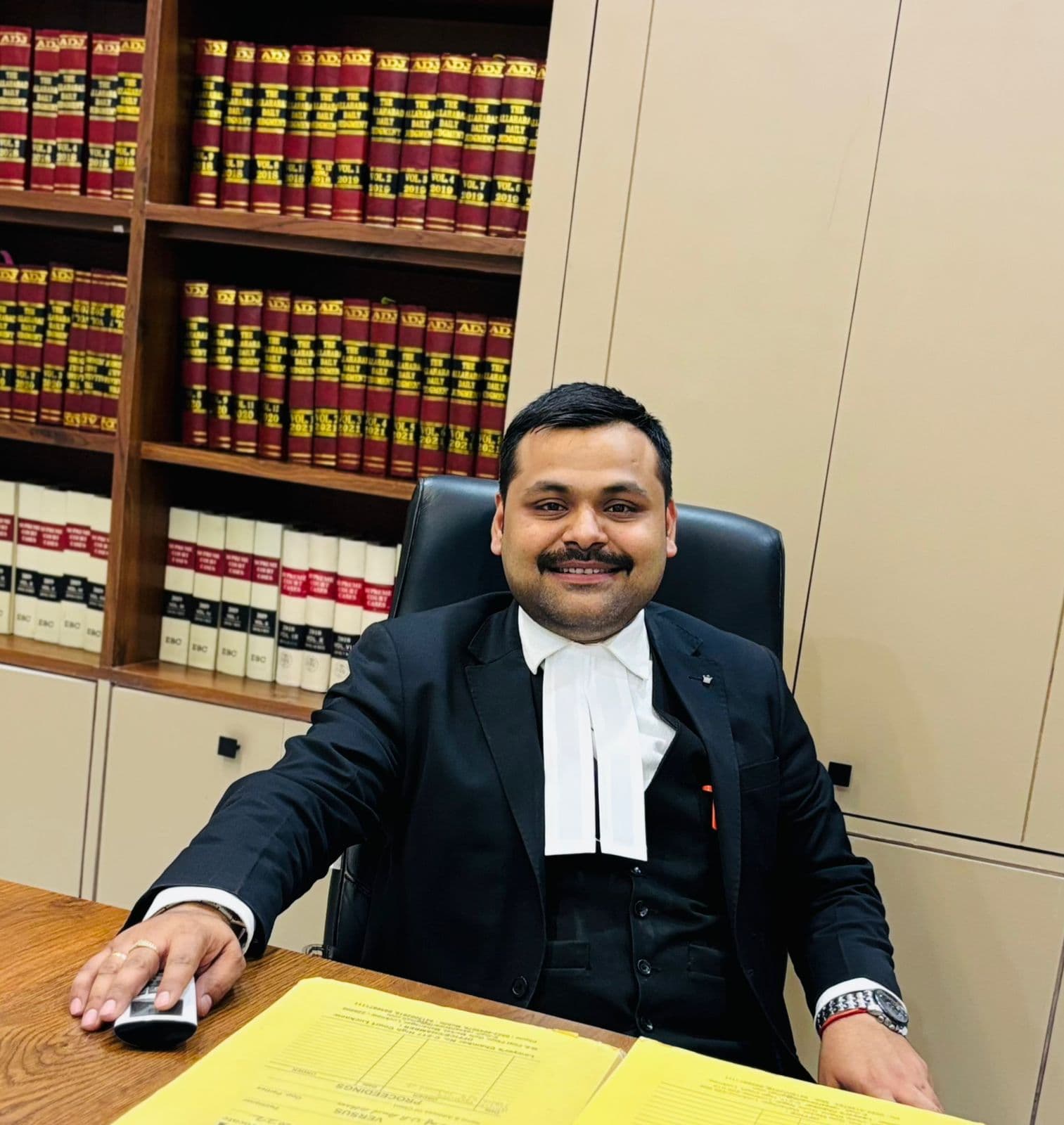
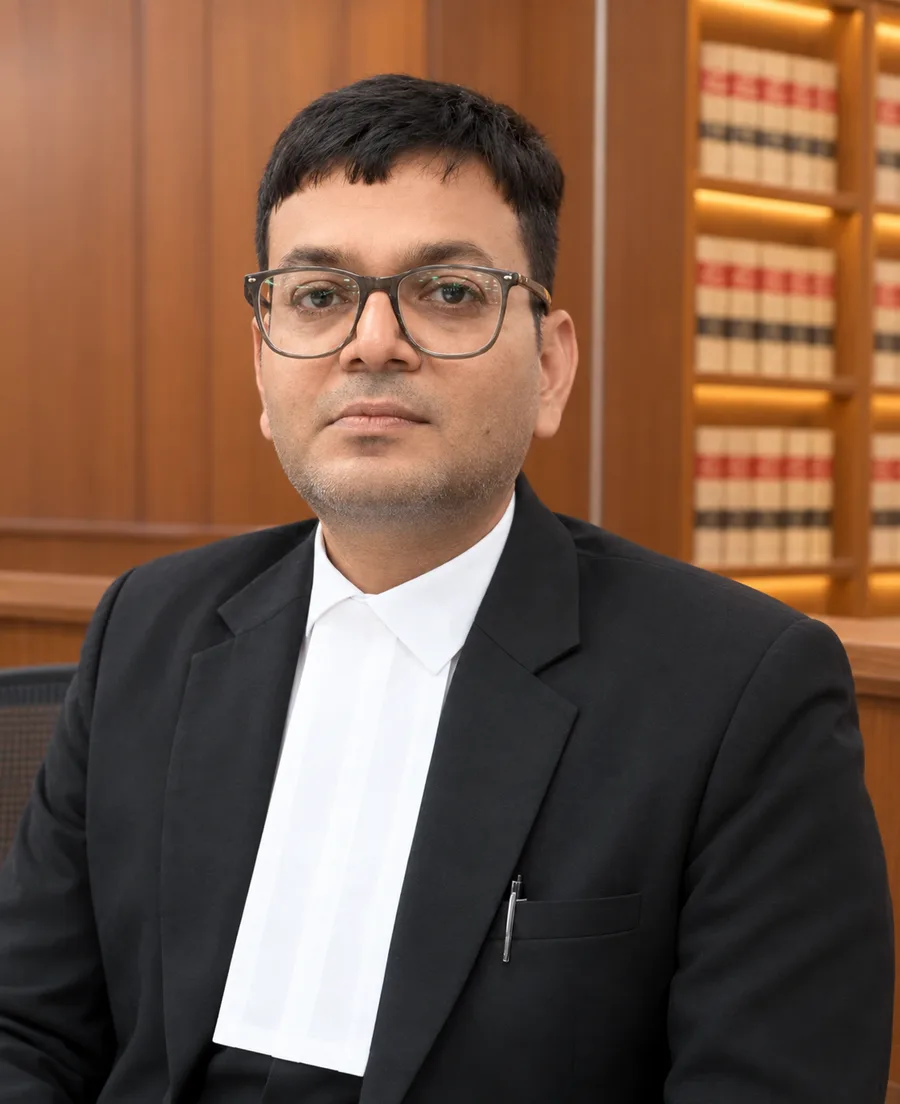
Adv. Aditya Narayan Shukla
Senior Associate Advocate
Delhi, Lucknow & Prayagraj
B.A., LL.B. (University of Lucknow)
- Criminal Matters
- Civil Matters
- Tax Matters
Sumanjari & Co. Advocates provides civil advocate and lawyer services in Lucknow for civil suits, recovery of money, injunctions, contractual disputes, and civil appeals before the District Courts and the Allahabad High Court, Lucknow Bench.
A civil suit in Lucknow usually starts with a legal notice and plaint before the Civil Judge at the Civil Court, Kaiserbagh, moves through written statement, evidence and arguments, and can reach decree execution or appeal at the Allahabad High Court, Lucknow Bench. Agricultural land disputes instead go to the revenue courts. The ten stages below explain each step.
Adv. Jitendra Tiwari (Director) leads our civil practice, supported by Adv. Aditya Narayan Shukla, Adv. Priyesh Dwivedi, Adv. Adarsh Pratap Singh and Adv. Devesh Tiwari in suits, injunctions, recovery and appellate work. Each profile below sets out the advocate's individual practice areas and location.
Senior Associate Advocate

Associate Advocate

Associate Advocate
Reach our Lucknow team at Shushant Golf City or our chamber at the Allahabad High Court, Lucknow Bench in Gomti Nagar. Please call to confirm the appropriate chamber and arrange your consultation before visiting.
The best fit depends on the claim, court and stage of your dispute, not a search ranking. Ask about civil trial experience, limitation, interim injunctions, documentary evidence and decree execution. Check who will draft and appear, whether settlement is appropriate, and the written scope and fees. A civil advocate should explain the difference between trial, appeal and execution; no lawyer can guarantee recovery or a favourable decree.
Sumanjari & Co. Advocates is a second-generation law firm with 30+ years of legal experience and 10,000+ cases solved by its team. Each advocate's individual practice areas are listed on their profile; no outcome is guaranteed.
Civil disputes — whether a recovery claim, a contractual disagreement, a partition among family members, or a dispute over possession — are governed by the Code of Civil Procedure, 1908, and depend heavily on documentation, timelines, and procedural strategy. Sumanjari & Co. Advocates advises and represents clients through each stage, from a legal notice and the drafting of pleadings to trial, execution, and appeal.
We handle civil suits and recovery proceedings before the Civil Judge and District Courts, Lucknow, execution of decrees, and civil appeals and revisions before the Allahabad High Court, Lucknow Bench.
Trial of civil suits, recovery proceedings, and applications for interim relief before the Civil Judge (Junior/Senior Division) and District Judge.
First and second appeals, civil revisions, and writ matters arising from civil proceedings, argued from our chambers at Block D-311.
Execution proceedings under Order XXI CPC to enforce decrees once they become final.
Negotiated and mediated resolution of civil disputes, in and outside court, where both parties are open to settlement.
The codes and special statutes that decide which Lucknow forum hears a civil dispute and how it proceeds, from the Civil Court at Kaiserbagh to the revenue courts and the Allahabad High Court, Lucknow Bench.
| Law | Key provisions | Where it matters |
|---|---|---|
| Code of Civil Procedure, 1908 | s.9, 15–20 (forum), 26 & O.VII (plaint), s.80 (notice to Government), s.89 (ADR), s.96 / s.100 (appeals), s.115 (revision), s.148A (caveat), O.V, VIII, X–XIV, XVIII r.4, XX, XXI, XXVI r.9, XXXVIII r.5, XXXIX r.1–2 & r.3, XL, XLI, XLIII, XLVII | Procedure in every civil suit at the Civil Court, Kaiserbagh |
| Specific Relief Act, 1963 (amended 2018) | s.6 (dispossession within 6 months), s.10 (specific performance), s.34 (declaration), s.38–39 (injunctions) | Property, possession and contract suits |
| Limitation Act, 1963 | Art. 58 (declaration, 3 years), Art. 65 (possession on title, 12 years), Art. 113 (residuary, 3 years); s.5 (does not apply to suits) | Whether the suit is still in time |
| Transfer of Property Act 1882; Registration Act 1908; Indian Stamp Act 1899 (as applicable in UP) | TPA s.53A, 54, 58, 105–106; Registration Act s.17, 49 | Sale deeds, agreements to sell, leases, unregistered documents |
| UP Revenue Code, 2006 | s.24 (boundary disputes), s.34–35 (mutation), s.116 (partition of agricultural land), s.144 (declaration of bhumidhari rights), s.206 (bar on civil courts) | Agricultural land goes to the Tehsildar / SDM / Collector / Commissioner, Lucknow Division, and the Board of Revenue. |
| Commercial Courts Act, 2015 | s.2(1)(c), s.12 (specified value ₹3 lakh+), s.12A (mandatory pre-institution mediation), s.13 (appeals) | Commercial disputes at the Commercial Court, Lucknow |
| Court Fees Act, 1870 (UP amendments) & Suits Valuation Act, 1887 | Ad valorem vs fixed fees; valuation | Decides court fee and the pecuniary forum |
| Legal Services Authorities Act, 1987 | s.19–21 | Lok Adalat awards are final; DLSA Lucknow and the High Court Legal Services Sub-Committee at Lucknow |
| Constitution of India | Art. 227 | Supervisory petitions at the Lucknow Bench against interlocutory orders of the Lucknow civil courts |
Urgent stay and injunction applications to halt illegal construction, third-party alienation, or dispossession — by proving a prima facie case, balance of convenience, and irreparable injury. Where a stay order is breached, we pursue enforcement under Order 39 Rule 2A CPC, including detention and attachment for contempt of the injunction.
Ordinary civil recovery suits, governed by the 3-year limitation under the Limitation Act, 1963, versus fast-track Summary Suits under Order 37 CPC for claims founded on written contracts and negotiable instruments — where the defendant cannot even enter a defence without first obtaining leave of the court.
Suits to enforce registered Agreements to Sell — with Section 10 read with Section 16 making specific performance a statutory rule rather than a discretion after the 2018 amendment — and cancellation of void or fraudulent sale deeds under Section 31, valued and stamped in accordance with the UP Court Fees Act.
Two-stage partition litigation for urban house and commercial properties in Lucknow: a preliminary decree declaring the parties’ shares, followed by Amin / Commissioner Kurra preparation and the final decree that physically divides the property. Declaratory suits under Section 34 of the Specific Relief Act secure judicial recognition of title and status.
For defendants, a time-barred, undervalued or statutorily barred suit can often be dismissed at the threshold itself — through an application for rejection of plaint under Order 7 Rule 11 CPC, or a plea of res judicata under Section 11 CPC where the dispute has already been decided between the same parties.
Appellate escalation from the Civil Court, Kaiserbagh to the District Judge, Lucknow, and onward to the Allahabad High Court, Lucknow Bench — first appeals on facts and law, second appeals on substantial questions of law, civil revisions, and Article 227 supervisory petitions, argued from our chambers at D-311.
Where a suit is filed decides its cost, timeline and interim protection. The forums below sit in ascending order of pecuniary and appellate authority for civil litigation in Lucknow.
| Law | Key provisions | Where it matters |
|---|---|---|
| Civil Judge (Junior Division), Kaiserbagh | Nature of suits: lower-valuation money recovery suits, injunctions and possession suits. Urgent interim relief: temporary injunctions under Order 39 Rules 1 & 2 CPC, including ex parte ad-interim orders. | Appeals route: first appeal under Section 96 CPC to the District Judge, Lucknow, subject to valuation. |
| Civil Judge (Senior Division), Kaiserbagh | Nature of suits: higher-valuation civil suits, specific performance, partition and declaratory suits. Urgent interim relief: Order 39 injunctions, receivers under Order 40 and attachment before judgment. | Appeals route: first appeal to the District Judge or the Allahabad High Court, Lucknow Bench, depending on suit valuation. |
| District Judge, Lucknow | Nature of suits: first appeals under Section 96 CPC, appeals from interim orders under Order 43 CPC, and suits of the highest pecuniary valuation at the district level. Urgent interim relief: appellate stays under Order 41 Rule 5 CPC. | Appeals route: second appeal under Section 100 CPC on substantial questions of law to the Allahabad High Court, Lucknow Bench. |
| Commercial Court, Lucknow | Nature of suits: commercial disputes of specified value under the Commercial Courts Act, 2015, with mandatory Section 12A pre-institution mediation unless urgent interim relief is sought. Urgent interim relief: strict-timeline injunctions with Case Management Hearings and the 120-day written-statement forfeiture. | Appeals route: appeals under Section 13 of the Commercial Courts Act to the Commercial Appellate Division of the Allahabad High Court. |
| Allahabad High Court, Lucknow Bench (Gomti Nagar) | Nature of suits: second appeals under Section 100 CPC, civil revisions under Section 115 CPC, Article 227 supervisory petitions and higher-valuation first appeals. Urgent interim relief: writ-level and appellate interim orders with High Court oversight. | Appeals route: Letters Patent / special appeal where available, and special leave to the Supreme Court under Article 136. |
We begin with a confidential review of the facts and documents, often followed by a legal notice where appropriate, and clear advice on the relief available and the timelines that apply. We draft pleadings with care, seek interim relief where warranted, and represent you through trial, execution, and — where necessary — appeal before the Allahabad High Court, Lucknow Bench.
How a civil suit actually moves through the Civil Court at Kaiserbagh, the revenue courts, and the Allahabad High Court, Lucknow Bench, with the CPC and other provisions that govern each step.
Stage 1
Forum: Chamber consultation; DLSA Lucknow (pre-institution mediation)
Before any suit is drafted, we collect the title papers — khatauni, sale deed or registry, mutation extract — along with the underlying contract, correspondence and payment records, since a civil case stands or falls on its documents. A legal notice is often sent at this stage to place the other side on record and to invite a response, though it is a strategic step, not a universal precondition to filing.
Where the intended defendant is a government body such as the Lucknow Development Authority or the Lucknow Municipal Corporation, Section 80 of the Code of Civil Procedure requires two months' prior written notice before a suit can be filed, except where the court grants leave for urgent relief under Section 80(2). For commercial disputes, Section 12A of the Commercial Courts Act, 2015 makes pre-institution mediation mandatory unless urgent interim relief is sought, and skipping it can result in the suit being rejected at the threshold.
Key provisions: Section 80, Code of Civil Procedure, 1908; Section 80(2), Code of Civil Procedure, 1908; Section 12A, Commercial Courts Act, 2015
Stage 2
Forum: Civil Court, Kaiserbagh (Civil Judge Junior/Senior Division, District Judge); Commercial Court, Lucknow; revenue courts; UP-RERA; District Consumer Commission, Lucknow
Territorial jurisdiction under Sections 16 to 20 of the CPC depends on where the property is situated or where the cause of action arose, while pecuniary jurisdiction depends on the value of the suit. Confirm the current pecuniary limits for the Civil Judge (Junior and Senior Division) in Uttar Pradesh before assuming which court can hear a given claim; without that confirmation, treat the forum as depending on valuation rather than quoting a specific figure.
Disputes over agricultural land do not go to the civil court at all: Section 206 of the Uttar Pradesh Revenue Code, 2006 bars the civil court's jurisdiction over matters the revenue courts are empowered to decide, such as mutation, partition of agricultural holdings, and declarations of bhumidhari rights, which instead go to the Tehsildar, Sub-Divisional Magistrate, Commissioner (Lucknow Division) and the Board of Revenue in that hierarchy.
A commercial dispute of specified value is filed in the Commercial Court, Lucknow under the Commercial Courts Act, 2015 rather than the ordinary civil court. Builder-buyer disputes are better pursued before UP-RERA — see our RERA practice — and consumer complaints before the District Consumer Disputes Redressal Commission, Lucknow — see our consumer and motor accident practice.
Key provisions: Sections 16–20, Code of Civil Procedure, 1908; Section 206, UP Revenue Code, 2006; Section 2(1)(c), Commercial Courts Act, 2015
Stage 3
Forum: Civil Court, Lucknow (filing section / e-filing)
The plaint must comply with Order VII of the CPC, setting out the cause of action, the relief claimed, and the facts relied upon, with the documents listed under Order VII Rule 14 filed along with it. Correct valuation and payment of ad valorem or fixed court fee under the Court Fees Act (as applied in UP) determine both the amount payable and, indirectly, the pecuniary forum.
Every plaint must carry a verification and, since the 2002 CPC amendment, a statement of truth. Before filing, it is worth checking the caveat register — a caveat filed under Section 148A remains valid for ninety days and entitles the caveator to notice before any interim order is passed against them. Most civil filings in Lucknow can now be made through the eCourts e-filing portal in addition to the physical filing counter.
Key provisions: Order VII, Code of Civil Procedure, 1908; Order VII Rule 14, Code of Civil Procedure, 1908; Section 148A, Code of Civil Procedure, 1908
Stage 4
Forum: Civil Court, Lucknow
Where delay would defeat the purpose of the suit, a temporary injunction can be sought under Order XXXIX Rules 1 and 2 of the CPC, which requires the applicant to show a prima facie case, that the balance of convenience favours the injunction, and that irreparable harm would otherwise result. In genuinely urgent cases, an ex parte order can be obtained under Rule 3, though the applicant must then comply with conditions for serving the opposite side promptly, and a breach of an injunction can be dealt with under Order XXXIX Rule 2A.
Other interim remedies include the appointment of a receiver under Order XL to preserve or manage disputed property, and attachment before judgment under Order XXXVIII Rule 5 where there is a real risk the defendant will dispose of assets to defeat the decree. An order refusing or granting an injunction is independently appealable under Order XLIII to the District Judge, without waiting for the final decree.
Key provisions: Order XXXIX Rules 1–2, Code of Civil Procedure, 1908; Order XXXIX Rule 2A; Order XXXIX Rule 3; Order XL, Code of Civil Procedure, 1908; Order XXXVIII Rule 5; Order XLIII, Code of Civil Procedure, 1908
Stage 5
Forum: Civil Court, Lucknow
Summons is served on the defendant under Order V of the CPC, including, where permitted, by electronic means such as email alongside conventional modes. An ordinary defendant has thirty days under Order VIII Rule 1 to file a written statement, extendable up to ninety days for reasons recorded, though commercial suits under the Commercial Courts Act enforce a hard outer limit of one hundred and twenty days, after which the right to file is forfeited, as the Supreme Court confirmed in SCG Contracts India v. K.S. Chamankar Infrastructure (2019).
The written statement may include a counter-claim or a set-off against the plaintiff's claim. If the defendant does not appear despite valid service, the court can proceed ex parte and pass an ex parte decree, which the defendant can later apply to set aside under Order IX Rule 13 on showing sufficient cause for the non-appearance.
Key provisions: Order V, Code of Civil Procedure, 1908; Order VIII Rule 1, Code of Civil Procedure, 1908; Order IX Rule 13, Code of Civil Procedure, 1908
Stage 6
Forum: Civil Court, Lucknow; Mediation Centre, Civil Court, Lucknow; National Lok Adalat (DLSA Lucknow)
Either party can seek discovery and inspection of documents under Order XI, and admissions of fact or documents can be recorded under Order XII to narrow the issues genuinely in dispute. The court may also examine the parties directly under Order X to clarify the pleadings before framing issues.
Section 89 of the CPC empowers the court to refer the dispute to mediation, conciliation, or a Lok Adalat where a settlement appears possible. An award passed by a Lok Adalat is final and is not open to appeal under Section 21 of the Legal Services Authorities Act, 1987, which makes the National Lok Adalat, coordinated through DLSA Lucknow, an efficient route for disputes capable of settlement. Court fee already paid may be refundable on a settlement reached through this route, subject to the applicable rules.
Key provisions: Order XI, Code of Civil Procedure, 1908; Order XII, Code of Civil Procedure, 1908; Order X, Code of Civil Procedure, 1908; Section 89, Code of Civil Procedure, 1908; Section 21, Legal Services Authorities Act, 1987
Stage 7
Forum: Civil Court, Lucknow
Once pleadings are complete, the court frames the issues on which the parties are at variance, distinguishing questions of law from questions of fact, under Order XIV of the CPC. Where a preliminary issue — such as a challenge to the court's jurisdiction or a plea of limitation — can dispose of the suit without going into the merits, the court will ordinarily try that issue first.
The way issues are framed shapes the entire trial that follows, since evidence is led and arguments are made issue by issue; it is worth reviewing the framed issues carefully and seeking correction promptly if a material issue has been omitted or mis-stated.
Key provisions: Order XIV, Code of Civil Procedure, 1908
Stage 8
Forum: Civil Court, Lucknow; Court Commissioner / Amin
Evidence-in-chief is ordinarily led by affidavit under Order XVIII Rule 4, with the witness then cross-examined in court or before a commissioner appointed for recording evidence. In property and boundary disputes, a local investigation or survey commission can be appointed under Order XXVI Rule 9 to inspect the site, verify boundaries, and report on encroachment, which often proves decisive.
Certified copies of revenue records — khatauni, khasra, and mutation extracts — are routinely proved through the concerned revenue official, and electronic evidence such as photographs or recordings requires a certificate under Section 63 of the Bharatiya Sakshya Adhiniyam before it can be read in evidence.
Key provisions: Order XVIII Rule 4, Code of Civil Procedure, 1908; Order XXVI Rule 9, Code of Civil Procedure, 1908; Section 63, Bharatiya Sakshya Adhiniyam, 2023
Stage 9
Forum: Civil Court, Lucknow
After evidence closes, both sides present final arguments, often supported by written submissions summarising the evidence against each framed issue. The court then delivers judgment and draws up the decree under Order XX, which also addresses costs under Section 35 of the CPC.
A party dissatisfied with the judgment on a ground apparent from the record, or discovering new and important evidence that could not have been produced earlier despite due diligence, can apply for review under Order XLVII before the same court, instead of or in addition to filing an appeal. The certified copy of the judgment and decree should be obtained promptly, since limitation for any appeal runs from the date of the decree.
Key provisions: Order XX, Code of Civil Procedure, 1908; Section 35, Code of Civil Procedure, 1908; Order XLVII, Code of Civil Procedure, 1908
Stage 10
Forum: District Judge, Lucknow; Allahabad High Court, Lucknow Bench; executing court, Civil Court, Lucknow
A first appeal lies under Section 96 of the CPC, with the appellate forum — the District Judge or the Allahabad High Court, Lucknow Bench — depending on the valuation of the original suit; confirm the current pecuniary thresholds in Uttar Pradesh before advising which forum applies. A second appeal to the Lucknow Bench under Section 100 is confined to a substantial question of law, and a civil revision under Section 115 or a supervisory petition under Article 227 may lie against orders that are not independently appealable.
Once a decree is final, execution proceeds under Order XXI before the executing court in Lucknow, through modes such as attachment, sale of property, or delivery of possession; arrest and detention in execution of a money decree is available only in limited circumstances and is treated as a last resort. Filing an appeal does not itself stay execution — a separate stay application under Order XLI Rule 5 must be made and granted.
Key provisions: Section 96, Code of Civil Procedure, 1908; Section 100, Code of Civil Procedure, 1908; Section 115, Code of Civil Procedure, 1908; Article 227, Constitution of India; Order XXI, Code of Civil Procedure, 1908; Order XLI Rule 5, Code of Civil Procedure, 1908
Common questions clients bring to us — drawn from our civil litigation practice in Lucknow.
A temporary injunction under Order XXXIX Rules 1 and 2 CPC requires showing a prima facie case, that the balance of convenience favours you, and that irreparable injury would result if it is refused.
Ask Us About This →It depends on the claim — a suit for specific performance must be filed within three years under Article 54 of the Limitation Act, 1963, while suits not covered by a specific article generally carry a three-year period under the residuary Article 113.
Ask Us About This →An executable decree may be enforced under Order XXI CPC, subject to any stay or legal restriction. An appeal does not by itself stay execution. Attachment and sale of property or other modes depend on the decree and applicable law.
Ask Us About This →A first appeal under Section 96 CPC examines both facts and law, while a second appeal under Section 100 CPC before the High Court is confined to substantial questions of law.
Ask Us About This →It depends on the nature of the land and the relief sought. Section 206 of the UP Revenue Code bars the civil court from deciding matters the revenue courts are empowered to decide, such as mutation, partition of agricultural holdings, and declarations of bhumidhari rights, which instead go to the Tehsildar, SDM, Commissioner, or Board of Revenue. Non-agricultural property disputes, by contrast, are ordinarily filed in the civil court.
Ask Us About This →Yes. Section 80 of the CPC requires two months' prior written notice before suing a government body such as the Lucknow Development Authority or the Lucknow Municipal Corporation, except where the court grants leave for urgent relief under Section 80(2). Filing without the notice, or without obtaining leave, risks the suit being dismissed at the threshold.
Ask Us About This →A commercial dispute of the specified value under the Commercial Courts Act, 2015 — such as a contract, partnership, or intellectual property dispute above the statutory threshold — is filed before the Commercial Court, Lucknow rather than the ordinary civil court. Mandatory pre-institution mediation under Section 12A applies unless urgent interim relief is sought.
Ask Us About This →Yes. In a boundary or encroachment dispute, the court can appoint a local commissioner under Order XXVI Rule 9 of the CPC to inspect the site, verify boundaries against revenue records, and submit a report, which often becomes central evidence at trial.
Ask Us About This →A first appeal under Section 96 CPC goes to the District Judge or the Allahabad High Court, Lucknow Bench, depending on the valuation of the suit. A second appeal, confined to a substantial question of law under Section 100, lies only to the Lucknow Bench. Confirm the applicable pecuniary threshold before assuming which forum hears a specific first appeal.
Ask Us About This →An ex parte ad-interim injunction under Order XXXIX Rule 3 of the CPC can be granted without notice to the other side in genuinely urgent cases, but the applicant must then comply with strict conditions for promptly serving the opposite party and the application papers. Such orders are reviewed quickly once the other side appears.
Ask Us About This →Not automatically. A decree must be executed under Order XXI of the CPC through the executing court, which can take time depending on whether the judgment-debtor has identifiable assets, whether an appeal and stay are sought, and which mode of execution is pursued. We help clients identify realistic recovery options once a decree is in hand.
Ask Us About This →A recovery suit, declaration, partition claim and injunction do not follow an identical filing route. We review the cause of action, property location, claim value, court fees and limitation before recommending a civil court, commercial court or contractual arbitration. Do not assume that sending a legal notice extends the time to sue. Urgent interim relief requires evidence of the threatened harm and remains subject to the court's assessment.
Bring the agreement or title documents, payment records, notices and delivery proofs, relevant messages, previous pleadings and orders, and a dated chronology. For an existing decree, include its certified copy and available information about the judgment-debtor's assets; execution may be available unless stayed and need not always await the end of every appeal. For title and possession issues, also see our property and land dispute practice.
Speak with our team about your recovery suit, injunction, contractual dispute, or civil appeal — practising before the District Courts and the Allahabad High Court, Lucknow Bench.
Consult NowSumanjari & Co. Advocates
30+ years of firm-wide legal experience across practice areas.Each matter is assessed on its own facts and applicable law.