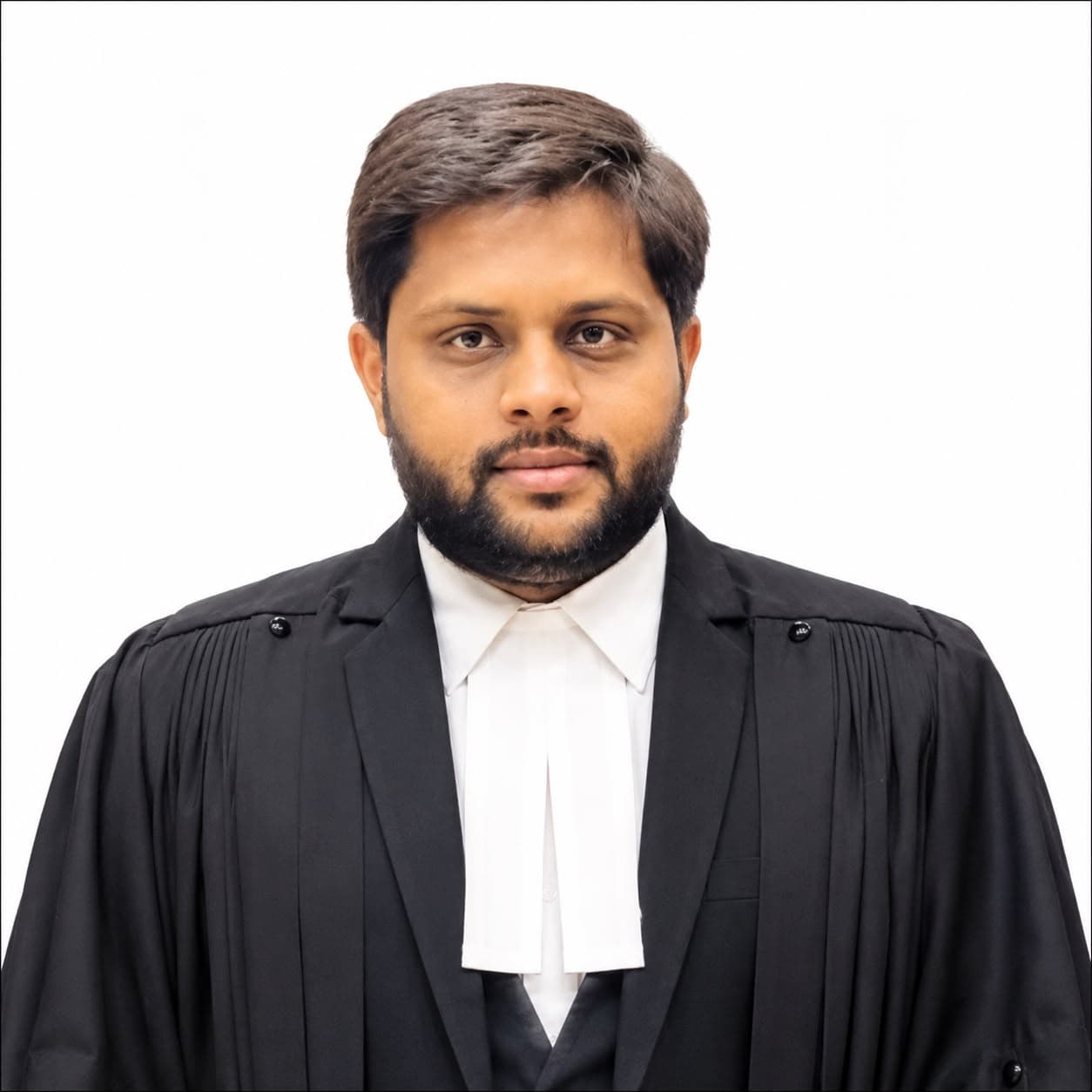
Adv. Aishwarya Pandey
Associate Partner
Lucknow
BBA LL.B. (Hons.), LL.M.
- Family & Matrimonial
- Constitutional Matters
Representation before the Allahabad High Court, Lucknow Bench for writ petitions, bail and quashing applications, and civil, criminal, family, service and tax appeals from the Awadh region.
The Lucknow Bench sits at Vibhuti Khand, Gomti Nagar, and hears cases from sixteen districts of the Awadh region. Our chamber, Block D-311, is in the Bench complex itself. The steps below explain how a case moves from filing to judgment.
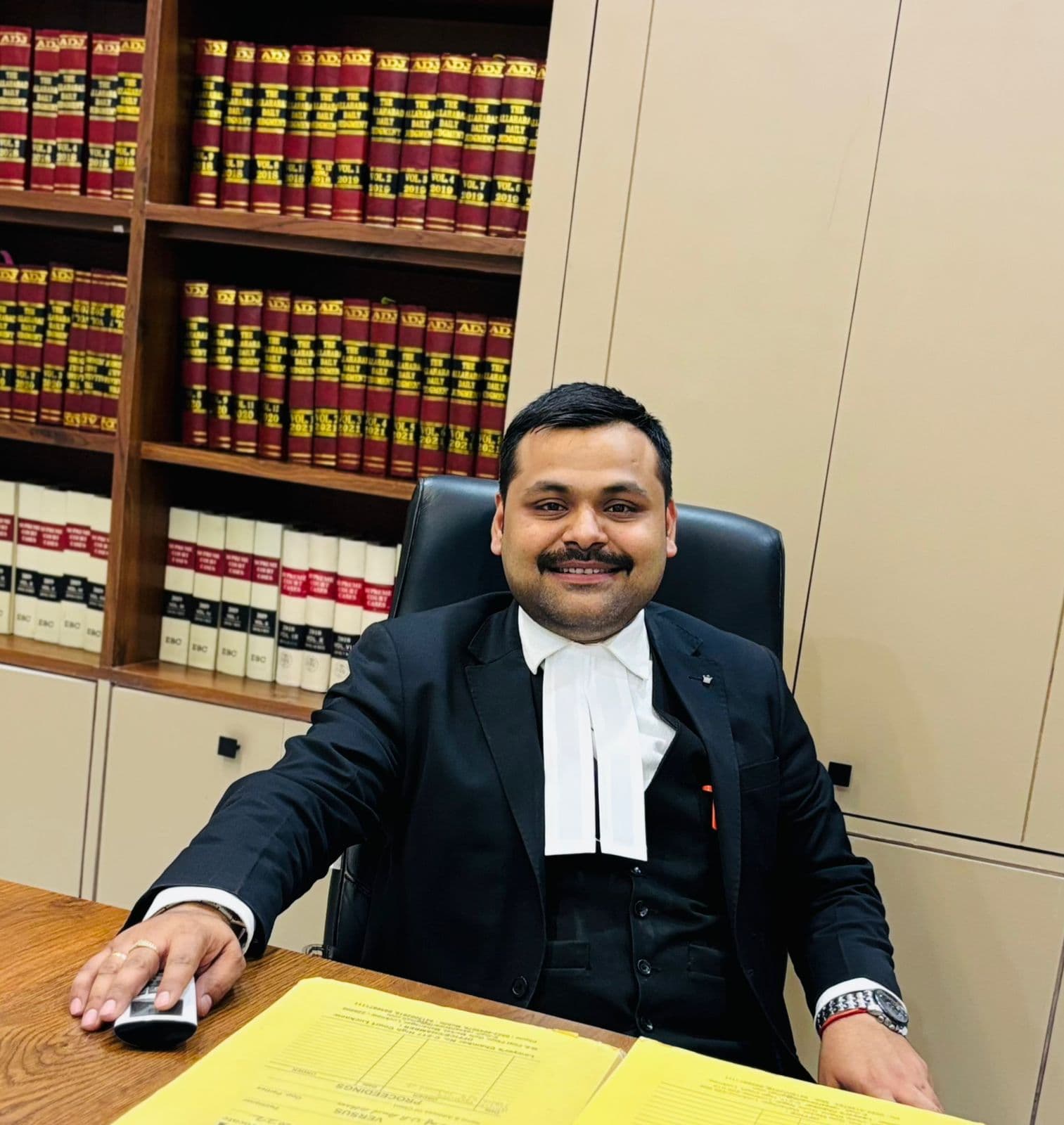
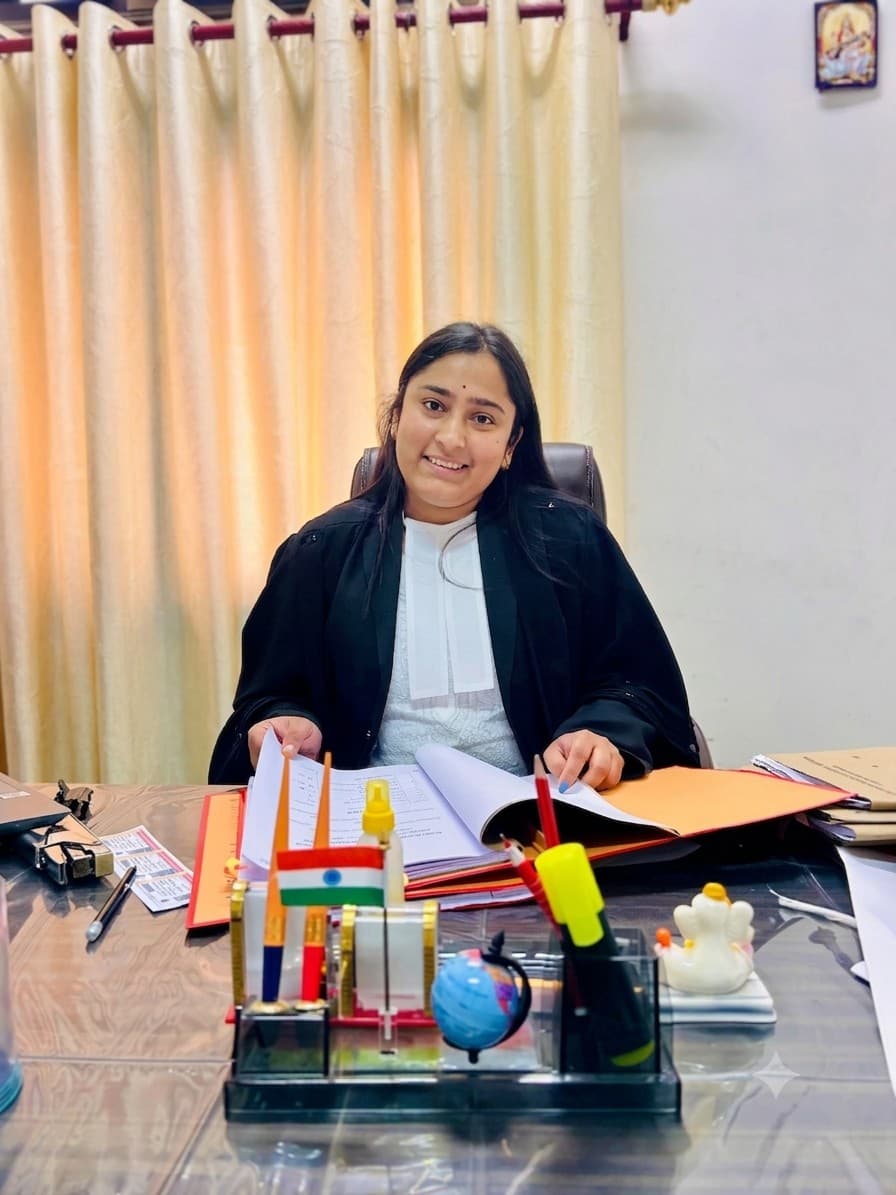
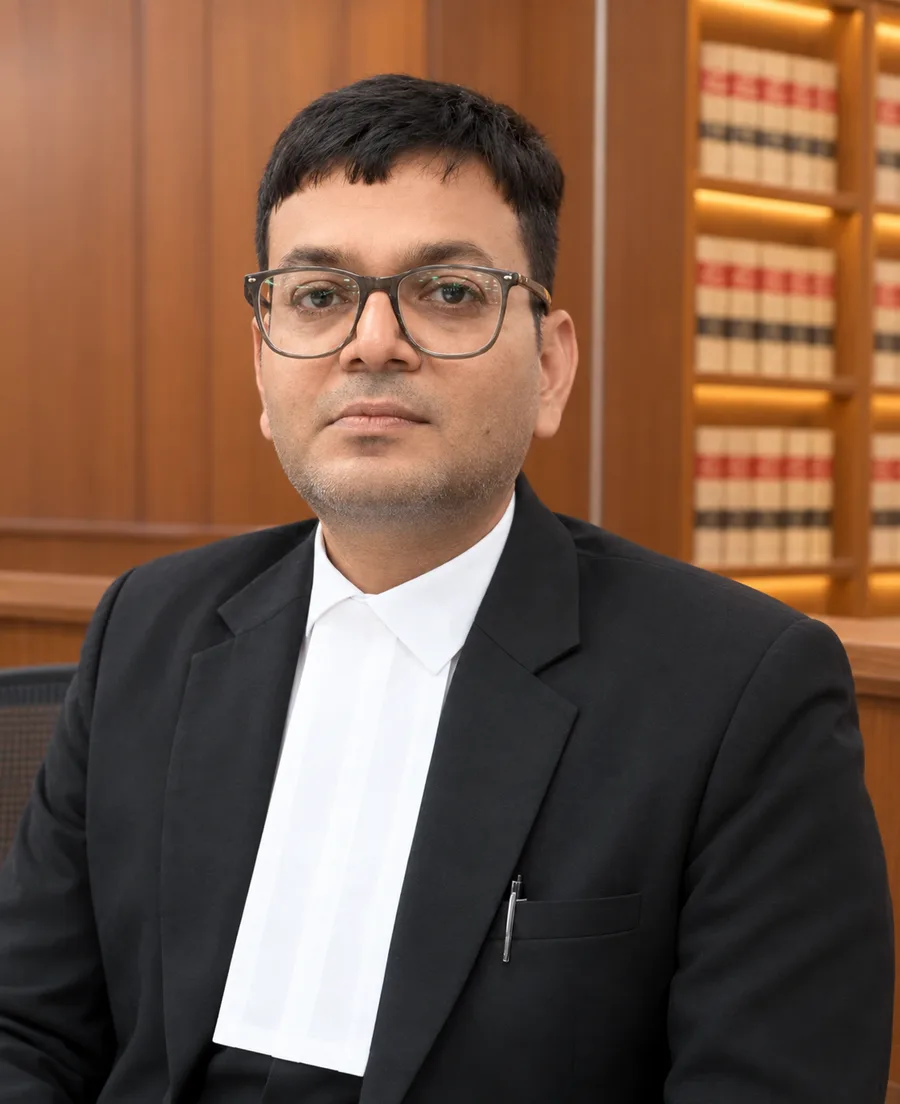
Adv. Jitendra Tiwari leads our High Court practice alongside Adv. Aishwarya Pandey, Adv. Aditya Narayan Shukla, Adv. Priyesh Dwivedi, Adv. Adarsh Pratap Singh and Adv. Devesh Tiwari. Each profile below sets out that member's individual practice areas.
Associate Partner
Senior Associate Advocate

Associate Advocate

Associate Advocate
Reach our Lucknow team at Shushant Golf City or our chamber at the Allahabad High Court, Lucknow Bench in Gomti Nagar. Please call to confirm the appropriate chamber and arrange your consultation before visiting.
Choose for the proceeding you need: a writ, bail application, quashing petition or statutory appeal. Ask about Lucknow Bench jurisdiction, maintainability, limitation and the record needed to present the grounds. Confirm who will settle the pleadings, attend hearings and communicate orders, and agree the scope and fees. Having a chamber near the court helps coordination but does not establish expertise or guarantee admission, relief or success.
Sumanjari & Co. Advocates is a second-generation law firm with 30+ years of legal experience and 10,000+ cases solved by its team. Each advocate's individual practice areas are listed on their profile; no outcome is guaranteed.
The Allahabad High Court, Lucknow Bench traces its origin to the Chief Court of Oudh, which was amalgamated with the Allahabad High Court under the United Provinces High Courts (Amalgamation) Order, 1948, creating the present Lucknow Bench. The Bench now sits in a dedicated campus at Vibhuti Khand, Gomti Nagar, Lucknow, moved from its earlier premises on Faizabad Road.
The Oudh Bar Association represents advocates practising at the Lucknow Bench, and the Bench functions as a full-fledged seat of the High Court for the districts within its jurisdiction, hearing writ petitions, criminal and civil appeals, and PIL independently of the Principal Seat at Prayagraj.
Cases from the following districts of the Awadh region are ordinarily heard at the Lucknow Bench rather than the Principal Seat at Prayagraj. Confirm the current list with the High Court before relying on it for a specific filing.
Residents of the remaining districts of Uttar Pradesh fall under the Principal Seat at Prayagraj. Sumanjari & Co. Advocates also appears there — see our team directory for advocates handling Prayagraj matters.
Writ petitions under Article 226/227 for certiorari, mandamus, habeas corpus and quo warranto, and public interest litigation.
Constitutional & writ practice →Anticipatory and regular bail, Section 528 BNSS quashing of FIRs and chargesheets, and criminal appeals and revisions.
Criminal law practice →First appeals, second appeals on substantial questions of law, and Article 227 petitions against civil court orders.
Civil litigation practice →Appeals from Family Court, Lucknow decrees under Section 19 of the Family Courts Act, 1984.
Divorce & matrimonial practice →Service and departmental appeals, tax and revenue references, RERA appeals before the Appellate Tribunal, and DRT/SARFAESI writs.
Service advocate practice →Public interest litigation, contempt petitions for non-compliance with court directions, and appeals under Section 37 of the Arbitration Act.
Company & corporate practice →The Lucknow Bench exercises both appellate jurisdiction over decrees and orders of the District Courts of the 16 Awadh districts and original jurisdiction in writ, bail and quashing matters. The correct case type determines the roster Bench, the court fee and the limitation period.
| Law | Key provisions | Where it matters |
|---|---|---|
| Special Appeal | Chapter VIII Rule 5, Allahabad High Court Rules, 1952 | Intra-court appeals against Single Judge writ orders to a Division Bench of the Lucknow Bench. |
| First Appeal & First Appeal From Order (FAFO) | Section 96 CPC / Section 19 Family Courts Act; Order 43 Rule 1 CPC / Section 173 MV Act (FAFO) | Challenging decrees and appealable interim injunction or MACT orders from all 16 Awadh districts under the Lucknow Bench. |
| Second Appeal | Section 100, Code of Civil Procedure, 1908 | Challenging appellate decrees of District Judges on framed substantial questions of law. |
| Criminal Misc. Bail, Anticipatory Bail & Quashing Applications | Section 483 BNSS (439 CrPC); Section 482 BNSS (438 CrPC); Section 528 BNSS (482 CrPC) | Pre-arrest protection, post-arrest bail, and quashing of chargesheets and summoning orders before the Lucknow Bench. |
| Writ-A (Service), Writ-B (Revenue), Writ-C (Civil/Misc) & Criminal Misc. Writ | Articles 226/227, Constitution of India | Constitutional and supervisory remedies against state authorities, tribunals, and subordinate courts within the Lucknow Bench jurisdiction. |
| Contempt Application (Civil) | Section 12, Contempt of Courts Act, 1971 | Enforcing time-bound compliance with High Court mandamus and stay directions against defaulting officials. |
Filing in the wrong forum costs months. These five situations are where a direct approach to the Lucknow Bench is the correct — or the only — route.
Quashing of an FIR, chargesheet or summoning order is exclusive to the High Court, by a Criminal Misc. Writ Petition or an application under Section 528 BNSS (formerly Section 482 CrPC) — no District Court can exercise this power.
Challenges to State, LDA, Municipal, Revenue or Service orders lie directly to the High Court under Article 226 where no efficacious alternative remedy exists — bypassing the District Court hierarchy entirely.
Anticipatory bail is ordinarily sought first before the Sessions Court; a direct application to the High Court is maintainable only in exceptional circumstances per the Ankit Bharti Full Bench guidelines, or after the Sessions Court has rejected the plea.
Petitions for appointment of an arbitrator under Section 11 of the Arbitration and Conciliation Act, 1996 are filed directly before the High Court where the statute so designates, not before the District Court.
Where a District Court or Tribunal refuses to decide an urgent stay application or acts without jurisdiction, the supervisory jurisdiction of the High Court under Article 227 can be invoked directly.
From certified copies and drafting through filing, listing, and final hearing, to judgment and any further appeal to the Supreme Court.
Stage 1
Forum: Lower court or authority whose order is under challenge
Every High Court filing rests on the record of the proceedings below — the impugned order, the pleadings, and any annexures relied upon. We start by identifying what the lower court, tribunal, or authority actually decided, and obtaining a certified copy of the order, since an uncertified or incomplete copy is a common ground for a defect memo at the filing counter.
Where the challenge concerns inaction rather than an order — for example, a department that has not decided a representation — we assess whether a representation and a reasonable waiting period should precede the writ, or whether the delay itself justifies moving directly to the Lucknow Bench.
Key provisions: Certified copy requirement, High Court Rules
Stage 2
Forum: Chamber drafting; Allahabad High Court, Lucknow Bench
The petition or appeal is drafted to set out the facts, the grounds of challenge, and the relief sought, supported by a sworn affidavit. For a writ petition under Article 226, the grounds must engage a recognised basis for interference — violation of fundamental rights, want of jurisdiction, or a decision vitiated by an error apparent on the face of the record — since the writ jurisdiction is not an ordinary avenue of appeal against every unfavourable order.
For a first appeal, second appeal, or revision arising from a Lucknow civil or criminal court, the memorandum of appeal must identify the specific findings challenged, and, for a second appeal, the substantial question of law framed for the Bench's consideration.
Key provisions: Article 226, Constitution of India; Section 100, Code of Civil Procedure, 1908 (second appeal)
Stage 3
Forum: Allahabad High Court, Lucknow Bench, Gomti Nagar
Filing can be made at the filing counter at the Lucknow Bench or through the High Court's e-filing facility. After filing, the case goes through stamp reporting, where the registry checks court fee, limitation, and formal compliance with the Rules of Court; objections raised at this stage are called defects, and they must be cured within the time allowed or the filing risks being treated as never made.
Common defects include an uncertified annexure, an unsigned affidavit, an incorrect cause-title, or a missing index; reviewing the draft against the registry's checklist before filing reduces the number of objection rounds.
Key provisions: Rules of the Court, Allahabad High Court
Stage 4
Forum: Allahabad High Court, Lucknow Bench
Once defects are cured, the case is listed before the appropriate Bench according to its subject-matter roster. Listing and hearing dates are published on the High Court's cause list on allahabadhighcourt.in, and tracking the case there is the most reliable way to know the next date; no fixed number of days from filing to first listing can be promised.
Urgent matters — such as a plea for interim protection from arrest, or a stay of imminent dispossession — can be mentioned for early listing before the relevant Bench, subject to the court's practice directions in force at the time.
Key provisions: Cause list practice, Allahabad High Court
Stage 5
Forum: Allahabad High Court, Lucknow Bench
At the first substantive hearing, the court may admit the petition and issue notice to the respondents, or dismiss it at the threshold if it does not disclose a maintainable case. Interim relief — such as a stay of the impugned order, or protection from coercive action — can be sought at this stage, though it is granted only where the applicant shows a prima facie case and that the balance of convenience favours interim protection.
For writ petitions seeking to quash a criminal proceeding or restrain arrest, the standards discussed in our criminal law guide at Stage 3 and Stage 7 apply; for civil appeals, the standards for interim relief discussed at Stage 4 of our civil law guide apply.
Key provisions: Order on admission and interim relief, High Court practice
Stage 6
Forum: Allahabad High Court, Lucknow Bench
Once notice is issued, the respondents file a counter affidavit answering the allegations, to which the petitioner may file a rejoinder. Supplementary affidavits can be filed with the court's leave where developments after the original filing are relevant — for example, a fresh order passed while the petition is pending.
In service matters, PIL, and matters involving government departments, this exchange of affidavits often takes the most time, since multiple authorities may need to respond; keeping track of which respondent has or has not filed its counter is important to avoid delay being attributed to the petitioner.
Key provisions: Exchange of pleadings, High Court practice
Stage 7
Forum: Allahabad High Court, Lucknow Bench
At final hearing, both sides argue the case on the pleadings and the record, and the court may call for the original record from the authority or court below where necessary. Video-conference appearance is available in appropriate cases, subject to the court's practice directions, which should be confirmed with the registry rather than assumed for a specific matter.
Written submissions are often invited alongside oral arguments, particularly in matters involving multiple respondents or detailed statutory provisions, and should be filed within any timeline the Bench directs.
Key provisions: Final hearing procedure, High Court practice
Stage 8
Forum: Allahabad High Court, Lucknow Bench; Supreme Court of India (SLP)
After judgment, a certified copy should be obtained promptly from the Copying Section, both to enable compliance by the respondent authority and to preserve the option of a further challenge. Where the judgment directs an authority to act — reconsider a representation, release an undertrial, or pass a fresh order — compliance can itself need to be monitored through a contempt petition if it is not honoured within the time directed.
A further challenge against a Division Bench judgment of the Lucknow Bench lies to the Supreme Court of India by special leave under Article 136; limitation for this runs from the date of judgment and should be checked immediately with the certified copy in hand rather than estimated.
Key provisions: Article 136, Constitution of India; Contempt of Courts Act, 1971
The Lucknow Bench maintains a Mediation and Conciliation Centre for disputes capable of amicable resolution, including certain civil, matrimonial, and commercial matters referred by the court. Settlement through mediation can conclude a long-running appeal faster than contested final hearing, though not every matter is suitable for referral.
Litigants who cannot afford representation can approach the High Court Legal Services Sub-Committee, Lucknow Bench, which coordinates free legal aid in eligible cases, working alongside the District Legal Services Authority, Lucknow for matters at the district level.
Districts within the Lucknow Bench's jurisdiction — including Sitapur and Barabanki — are ordinarily heard at the Lucknow Bench rather than the Principal Seat at Prayagraj. Confirm the current list of districts under the Lucknow Bench before assuming a specific district is covered, since the list should be verified against the High Court's own notification.
It depends on the remedy. A writ petition under Article 226 can sometimes be filed directly where no adequate alternative remedy exists, but a civil or criminal appeal ordinarily requires a prior order from the court or authority below. We assess whether the district court, tribunal, or High Court is the correct first forum for a given matter.
Stamp reporting is the registry's scrutiny of a freshly filed case for court fee, limitation, and compliance with the High Court Rules. Objections raised at this stage, called defects, must be cured within the time allowed; uncured defects can prevent the case from being listed for hearing.
Case status, listing dates, and the daily cause list for the Lucknow Bench are published on the Allahabad High Court's official website. Tracking the case number there is the most reliable way to confirm the next hearing date.
Video-conference appearance is available in appropriate cases, subject to the High Court's practice directions in force at the time. Whether a specific hearing can proceed this way should be confirmed with the registry rather than assumed.
A writ petition under Article 226 challenges a decision on constitutional or jurisdictional grounds and is not a routine substitute for an appeal. An appeal challenges a decree or order under a specific statutory right of appeal and can examine the merits of the decision far more broadly. The correct remedy depends on the order under challenge and the statute governing it.
At minimum, a certified copy of the impugned order, the pleadings and annexures from the proceedings below, identity and address proof, and a vakalatnama. Additional documents depend on the nature of the case — for instance, service records for a service matter, or the chargesheet and bail orders for a criminal matter.
Court fee is calculated on the nature of the relief claimed and, in money or property matters, the valuation of the claim, under the Court Fees Act as applied in Uttar Pradesh. We confirm the applicable fee during drafting so the filing is not held up at the stamp-reporting stage.
Short reads on criminal writs, service writs, RERA appeals and revenue writ-B practice before the Allahabad High Court, Lucknow Bench.
File UP-RERA complaints online via Form M/N.
Read Article →A step-by-step legal guide to challenging unlawful suspension orders and departmental charge sheets in India.
Read Article →CONTESTED MUTATIONS, UNREGISTERED WILLS & SDM APPEALS
Read Article →SECTION 438 CR.P.C. VS. SECTION 482 BNSS DUAL-FORUM STRATEGY
Read Article →AMENITIES & CARPET AREA FRAUD
Read Article →INQUIRIES, DISMISSAL PROTECTIONS & ARTICLE 311(2) EXCEPTIONS
Read Article →CO-TENURE DIVISION, PRELIMINARY DECREES & KURRAS RULES
Read Article →SECTION 439 CR.P.C. VS. SECTION 483 BNSS & DEFAULT BAIL
Read Article →TRIPARTITE RISKS, RBI RULES & HIGH COURT RELIEF
Read Article →RULE 7 UP CCA RULES 1999 & VAGUE CHARGE SHEETS
Read Article →Speak with our team about your writ petition, appeal, bail or quashing application before the Allahabad High Court, Lucknow Bench.
Sumanjari & Co. Advocates
30+ years of firm-wide legal experience across practice areas.Each matter is assessed on its own facts and applicable law.