Family & Matrimonial Matters

Family Law

Divorce Advocate & Lawyer in Lucknow

Discreet representation for mutual consent divorce, contested proceedings, maintenance, and child custody before the Family Court, Lucknow and appropriate appellate forums.

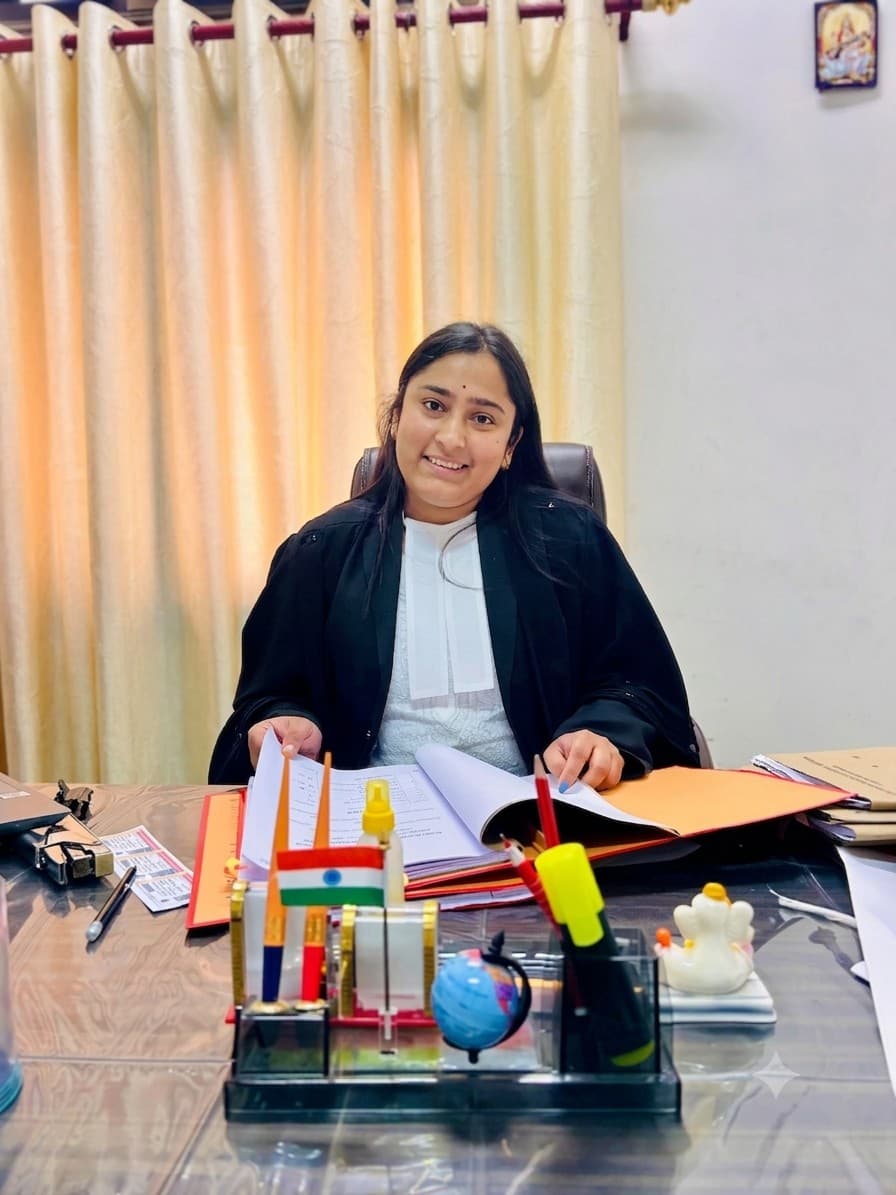
Our divorce and matrimonial practice is led by Adv. Aishwarya Pandey, Associate Partner at Sumanjari & Co. Advocates. We help you understand the available remedies, prepare your case, and address the financial and parenting decisions that accompany separation.

Adv. Aishwarya Pandey

Divorce Practice Lead

Adv. Aishwarya Pandey

Associate Partner

BBA LL.B. (Hons.), LL.M.

View Profile

Clear Advice at a Difficult Turning Point

Ending a marriage involves more than obtaining a decree. Decisions about children, financial support, housing, belongings, and pending disputes can shape everyday life long after proceedings conclude. Our approach begins with understanding your circumstances, identifying immediate concerns, and explaining the remedies under the law governing your marriage.

We assist spouses seeking an amicable separation as well as clients who need to file or defend contested proceedings. Where negotiation is realistic, we work towards precise and workable settlement terms. Where litigation is necessary, we focus on accurate pleadings, reliable evidence, and preparation for court rather than promises of a particular result.

Divorce & Matrimonial Services We Handle

Mutual Consent Divorce

When both spouses agree to separate, a clear settlement can reduce uncertainty. We assist with joint petitions, first and second motion proceedings, and applications for waiver of the cooling-off period where legally available.

  • Documenting voluntary consent and the terms of separation
  • Recording alimony, custody, visitation, and return of belongings
  • Coordinating settlement obligations with connected proceedings

Contested Divorce

When consent or settlement is not possible, the petition must establish a ground recognised by the applicable marriage law. We prepare and defend petitions, assess evidence, and represent clients through interim applications, hearings, and trial.

  • Advice on grounds such as cruelty, desertion, or adultery
  • Petitions, replies, evidence, and cross-examination
  • Defence against disputed allegations and unsupported claims

Maintenance & Alimony

Financial arrangements need to account for actual income, reasonable needs, dependants, and existing orders. We assist with interim support, litigation expenses, permanent alimony, and settlement structures suited to the facts.

  • Income and asset disclosures and supporting records
  • Applications and responses under applicable maintenance provisions
  • Enforcement, variation, and adjustment of overlapping awards

Child Custody & Parenting Arrangements

The welfare of the child is central to custody decisions. We help parents seek workable arrangements for care, schooling, holidays, communication, and access, including interim relief while the divorce remains pending.

  • Custody, guardianship, and visitation applications
  • Parenting schedules and child-support arrangements
  • Relocation, access disputes, and changing circumstances

Domestic Violence & Connected Proceedings

A divorce may run alongside protection, residence, maintenance, or criminal proceedings. We assess each case separately and coordinate the strategy so that pleadings, disclosures, and settlement steps remain consistent.

  • Protection and residence relief under the Domestic Violence Act
  • Representation in connected matrimonial cruelty proceedings
  • Lawful settlement, withdrawal, or quashing steps where permissible

Judicial Separation & Annulment

Divorce is not the only matrimonial remedy. Judicial separation does not dissolve the marriage, while annulment concerns a marriage that is void or voidable on statutory grounds. We assess which remedy is legally appropriate.

  • Distinguishing separation from dissolution of marriage
  • Review of grounds, limitation, and supporting evidence
  • Petitions and defence under the governing marriage law

Mutual Consent or Contested Divorce?

An Agreed Separation

Mutual consent divorce is based on a shared decision to end the marriage. Before filing, spouses should settle financial support, parenting arrangements, return of belongings, and how connected proceedings will be addressed. Clear payment milestones and compliance terms help prevent later disputes. Consent must remain voluntary through the legally required stages.

A Disputed Petition

Contested divorce requires the court to decide whether a statutory ground has been proved. The other spouse can respond and challenge the evidence. Interim maintenance or custody may need attention while the case continues. Even after litigation begins, mediation or settlement can remain an option if lawful and freely accepted.

Which Law Applies to Your Marriage?

The marriage framework determines the grounds, eligibility, procedure, and relief. A marriage certificate and details of the ceremony or registration help identify the correct starting point.

Hindu Marriage Act, 1955

For marriages governed by this Act, Section 13 provides statutory divorce grounds and Section 13B provides mutual consent divorce. Sections 24 and 25 concern interim support and permanent alimony; Section 26 concerns minor children. Judicial separation and nullity have separate statutory requirements.

Special Marriage Act, 1954

Civil marriages governed by this Act have their own provisions, including contested divorce under Section 27 and mutual consent divorce under Section 28. Eligibility, jurisdiction, and procedure must be assessed under the Act rather than assumed from a different marriage law.

Other Personal & Matrimonial Laws

Depending on the marriage and the parties, the Divorce Act, 1869, the Parsi Marriage and Divorce Act, 1936, or Muslim personal law and statutes such as the Dissolution of Muslim Marriages Act, 1939 may be relevant. Available remedies and procedures are not identical across these frameworks.

Maintenance, Protection & Guardianship

Related relief may arise under Section 144 of the Bharatiya Nagarik Suraksha Sanhita, 2023, the Protection of Women from Domestic Violence Act, 2005, and applicable guardianship or personal-law provisions. Existing orders and transitional rules for older cases must also be considered.

Grounds for a Contested Divorce

Cruelty

Physical or mental cruelty may be a divorce ground under the governing law. The court examines the conduct and its context; ordinary disagreements do not automatically establish cruelty. A careful chronology and reliable supporting material are important.

Desertion

Under the Hindu Marriage Act, desertion must ordinarily continue for at least two years immediately before the petition. Separation alone is not sufficient: intention, consent, reasonable cause, and the surrounding facts matter.

Adultery & Other Statutory Grounds

Adultery remains a civil divorce ground under relevant marriage laws even though it is no longer a criminal offence. Other grounds depend on the applicable statute and must meet its conditions. Evidence must be obtained lawfully, without unauthorised access to accounts or devices.

Long separation or relationship breakdown does not, by itself, create an ordinary Family Court ground called irretrievable breakdown under the Hindu Marriage Act. The Supreme Court's exceptional powers are distinct from statutory grounds available in a regular divorce petition.

The Divorce Process in Lucknow

  1. 01

    Consultation & Case Assessment

    We review the marriage, separation history, applicable law, residence, children, finances, and existing cases. This helps identify jurisdiction, urgent relief, and whether a negotiated or contested route is appropriate.

  2. 02

    Documents & Settlement Preparation

    We organise the documents and chronology. Where settlement is possible, discussions address alimony, child support, custody, belongings, assets, liabilities, and the lawful resolution of connected cases.

  3. 03

    Petition & Initial Court Proceedings

    A joint petition is filed for mutual consent divorce, or a contested petition is filed and served on the other spouse. The court checks the pleadings and may direct counselling or mediation. Interim applications may be considered separately.

  4. 04

    Motions, Mediation or Evidence

    A mutual consent matter proceeds through statutory motions, subject to any permissible waiver. A contested matter may involve a written response, framing of issues, evidence, cross-examination, and arguments if mediation does not resolve it.

  5. 05

    Decree & Follow-Through

    After the court decides the matter, we advise on the decree, settlement compliance, certified copies, enforcement, and any appeal. Remarriage should be considered only after applicable legal conditions and the appeal position have been checked.

Documents to Prepare for Your Consultation

Exact filing requirements depend on your case. Bring the records you already have; missing documents can be discussed at the consultation. Preserve originals and avoid altering messages or other evidence.

  • Marriage certificate, if available, and other evidence of the marriage such as photographs or invitations.
  • Identity and address documents, and details of the marriage location, residence, and last shared home.
  • A dated account of significant events, separation, reconciliation attempts, and earlier proceedings.
  • Income records, salary slips, tax returns, bank statements, assets, liabilities, and relevant expenses.
  • Children's birth certificates, school records, care arrangements, and education or medical expenses.
  • Copies of notices, complaints, petitions, court orders, and existing settlement agreements.
  • Lawfully obtained communications, medical records, or evidence relevant to the pleaded grounds.
  • Details of stridhan, jewellery, belongings, and jointly held property relevant to settlement terms.

Financial Settlements & Your Child's Welfare

A workable settlement distinguishes spousal support from child support and records whether payments are lump-sum, periodic, or linked to specific expenses. It should address due dates, transfer or return of assets, outstanding loans, and consequences of non-compliance. Divorce does not automatically transfer jointly held property or cancel obligations to a lender.

For children, we focus on arrangements that function in practice: school-day care, holidays, travel, medical decisions, communication, and handover times. Parenting arrangements should not use access to a child as leverage over financial disputes. Courts may revisit custody or support when circumstances change and the law permits it.

Where safety or coercion is a concern, settlement discussions must not replace necessary protective relief. Tell your advocate about urgent risks, existing protection orders, or restrictions that could affect mediation or contact with the other party.
Courts, Jurisdiction & Representation

Family Court, Lucknow

We assist with divorce petitions, matrimonial relief, maintenance, and custody before the Family Court where it has jurisdiction. Living in Lucknow does not automatically make every matrimonial case maintainable here: the statutory connections and facts must be checked before filing.

High Court & Connected Forums

Appeals and other appropriate proceedings may lie before the Allahabad High Court, Lucknow Bench, subject to jurisdiction and maintainability. Domestic violence and connected criminal proceedings may be before different courts. We assess the correct forum, remedy, and time limits for each matter.

Our Approach to Divorce Representation

Led by Adv. Aishwarya Pandey, our team explains the options and their practical implications, including the distinction between urgent interim relief and a final divorce decree. We discuss the scope of representation and fees after reviewing the matter, so advice, drafting, hearings, and connected proceedings can be understood separately.

Preparation includes checking the consistency of the case history, identifying evidence gaps, and reviewing existing orders before filing a new application. We approach settlement with care, but do not assume every matter can or should be resolved through mediation. Client instructions and lawful protection of rights remain central.

Frequently Asked Questions

How do I choose between mutual consent and contested divorce?

Mutual consent divorce requires both spouses to agree to dissolve the marriage and maintain consent through the required proceedings. A contested divorce may be appropriate when one spouse does not agree or key issues remain unresolved, but a recognised statutory ground must be established. We assess the applicable law and evidence before recommending a route.

How long does a divorce take in Lucknow?

There is no fixed completion time for every case. The applicable statute, service of notice, settlement, evidence, connected applications, and the court's schedule all affect duration. Mutual consent proceedings are generally less extensive than a contested trial, but no decree date can be guaranteed.

Can the six-month cooling-off period be waived?

In appropriate mutual consent cases under Section 13B of the Hindu Marriage Act, the court may waive the six-month interval between motions after considering the applicable legal criteria. Waiver is discretionary, not automatic, and does not remove other eligibility requirements or the need for continuing consent.

Is one year of separation necessary for mutual consent divorce?

Section 13B of the Hindu Marriage Act ordinarily requires the spouses to have lived separately for at least one year, to be unable to live together, and to agree to dissolve the marriage. Living separately concerns the marital relationship and does not always mean different addresses. Requirements under other laws must be checked separately.

Can I file in Lucknow if my spouse lives elsewhere?

Possibly, depending on the applicable jurisdiction provisions. Under the Hindu Marriage Act, relevant connections can include where the marriage was solemnised, where the respondent resides, where the spouses last resided together, and, for a wife filing a petition, where she resides when filing. Special situations and other marriage laws require a separate assessment.

How are maintenance and permanent alimony decided?

Courts consider factors such as income, earning capacity, assets, reasonable needs, dependants, and the circumstances of the parties. There is no universal percentage or automatic entitlement to a particular amount. Existing maintenance orders and financial disclosures are important to the assessment.

Who gets custody of the children after divorce?

The child's welfare is the paramount consideration. Courts examine care, stability, education, safety, and other relevant circumstances, including the child's wishes where appropriate. Custody is not determined solely by a parent's gender or income. Visitation and child support may be addressed separately.

Does divorce automatically divide property equally?

No general rule automatically divides all property equally on divorce in India. Title, contributions, the nature of the asset, applicable law, and negotiated terms matter. Stridhan is distinct from jointly held assets. A settlement should identify each asset and the steps needed to transfer or return it.

What if my spouse withdraws consent or refuses to attend?

A mutual consent decree ordinarily requires continuing consent at the relevant stages. If consent is withdrawn or attendance becomes an issue, the available procedural options must be assessed. A contested petition is not an automatic substitute and requires its own legal basis.

Do connected criminal cases end with a divorce settlement?

A settlement may provide for lawful steps in connected cases, but a divorce decree does not automatically close a criminal complaint or domestic violence proceeding. Withdrawal, compounding, or High Court quashing depends on the nature of the case and the court's approval where required.

What does divorce representation cost?

Fees depend on the scope of advice, drafting, hearings, interim applications, evidence, and any appeal. After reviewing the matter, the team can explain the proposed scope and fee arrangement. Court fees and other expenses should be distinguished from professional fees.

From Our Desk

Divorce & Matrimonial Blogs

Legal perspectives on divorce, maintenance, custody, and family disputes.

Pre-Litigation Protocol: Counseling, Mahila Thana (CAW Cell) Inquiries, Notice Strategy & Safe Preservation of Evidence

Pre-Litigation Protocol: Counseling, Mahila Thana (CAW Cell) Inquiries, Notice Strategy & Safe Preservation of Evidence

COUNSELING, MAHILA THANA INQUIRIES & EVIDENCE PRESERVATION

Read Article →
Deconstructing Section 498A IPC / Section 85 BNS: Safeguards Under Arnesh Kumar, Notice Under Section 35(3) BNSS & Preventing Mechanical Arrests

Deconstructing Section 498A IPC / Section 85 BNS: Safeguards Under Arnesh Kumar, Notice Under Section 35(3) BNSS & Preventing Mechanical Arrests

ARNESH KUMAR SAFEGUARDS, SECTION 35(3) BNSS & PREVENTING ARRESTS

Read Article →
The Domestic Violence Act (PWDVA 2005) Warfare: Section 12 Petitions, Shared Household Rights (Satish Ahuja), Protection & Residence Orders

The Domestic Violence Act (PWDVA 2005) Warfare: Section 12 Petitions, Shared Household Rights (Satish Ahuja), Protection & Residence Orders

SHARED HOUSEHOLD RIGHTS, RESIDENCE & INTERIM RELIEF

Read Article →
The Criminal Cross-Offensive: Defenses Against False Allegations, Extortion, Theft of Stridhan & Sections 182/211 IPC (Sections 217/248 BNS)

The Criminal Cross-Offensive: Defenses Against False Allegations, Extortion, Theft of Stridhan & Sections 182/211 IPC (Sections 217/248 BNS)

DEFENSES AGAINST FALSE PROSECUTION & EXTORTION CLAIMS

Read Article →
Stridhan Recovery & Seizure (Section 406 IPC / Section 316 BNS): Verification, Inventory Preparation & Defending Against Inflated Claims

Stridhan Recovery & Seizure (Section 406 IPC / Section 316 BNS): Verification, Inventory Preparation & Defending Against Inflated Claims

INVENTORY PROTOCOLS & DEFENDING AGAINST INFLATED CLAIMS

Read Article →
The Tripartite Maintenance Dilemma: Navigating Section 125 CrPC (Sec 144 BNSS), Section 24 HMA & Section 20/22 PWDVA Simultaneously

The Tripartite Maintenance Dilemma: Navigating Section 125 CrPC (Sec 144 BNSS), Section 24 HMA & Section 20/22 PWDVA Simultaneously

NAVIGATING SECTION 125, SEC 24 HMA & PWDVA OVERLAPS

Read Article →
The Rajnesh v. Neha Masterclass: Drafting Comprehensive Affidavits of Assets and Liabilities & Exposing Concealed Income

The Rajnesh v. Neha Masterclass: Drafting Comprehensive Affidavits of Assets and Liabilities & Exposing Concealed Income

ASSET & LIABILITY AFFIDAVITS & EXPOSING CONCEALED INCOME

Read Article →
Quantum Determination & Interim Maintenance: Standard of Living Tests, Qualifications vs. Actual Income, and S.V. Aditi / Jitesh Sharma Precedents

Quantum Determination & Interim Maintenance: Standard of Living Tests, Qualifications vs. Actual Income, and S.V. Aditi / Jitesh Sharma Precedents

STANDARD OF LIVING TESTS & ACTUAL EARNING CAPACITY

Read Article →
Maintenance Execution Battlefield: Arrest Warrants, Salary Attachments, Property Seizure & Defending Against Wilful Default

Maintenance Execution Battlefield: Arrest Warrants, Salary Attachments, Property Seizure & Defending Against Wilful Default

ARREST WARRANTS, SALARY ATTACHMENTS & DEFAULT DEFENSES

Read Article →
Maintenance for Working Wives, Deserting Spouses & Senior Citizens: Section 125(4) CrPC / Section 144(4) BNSS Bars & Parent Maintenance Act 2007

Maintenance for Working Wives, Deserting Spouses & Senior Citizens: Section 125(4) CrPC / Section 144(4) BNSS Bars & Parent Maintenance Act 2007

SECTION 125(4) STATUTORY BARS & PARENT MAINTENANCE CLAIMS

Read Article →
The Welfare of the Child Paramountcy: Guardians and Wards Act 1890, Section 26 HMA & Navigating Custody Battles

The Welfare of the Child Paramountcy: Guardians and Wards Act 1890, Section 26 HMA & Navigating Custody Battles

PARAMOUNT WELFARE PRINCIPLE & CUSTODY LITIGATION

Read Article →
Interim Custody & Visitation Schedules: Physical, Virtual, Holiday & Weekend Access Protocols

Interim Custody & Visitation Schedules: Physical, Virtual, Holiday & Weekend Access Protocols

PHYSICAL, VIRTUAL & HOLIDAY VISITATION PROTOCOLS

Read Article →
Parental Alienation Syndrome (PAS) & Shared Parenting: Doctrinal Defenses, Psychological Evaluations & Contempt in Access Violations

Parental Alienation Syndrome (PAS) & Shared Parenting: Doctrinal Defenses, Psychological Evaluations & Contempt in Access Violations

PAS DEFENSES, PSYCHOLOGICAL TESTS & CONTEMPT FOR ACCESS

Read Article →
International Child Custody, Habeas Corpus & Relocation: The Principle of Comity of Courts & Repatriation Battles

International Child Custody, Habeas Corpus & Relocation: The Principle of Comity of Courts & Repatriation Battles

COMITY OF COURTS & CROSS-BORDER REPATRIATION BATTLES

Read Article →
Cruelty as a Ground for Divorce: Mental, Physical, and False Criminal Prosecution (Samar Ghosh, Rani Narasimha Sastry & K. Srinivas Rao)

Cruelty as a Ground for Divorce: Mental, Physical, and False Criminal Prosecution (Samar Ghosh, Rani Narasimha Sastry & K. Srinivas Rao)

SAMAR GHOSH PRECEDENTS & FALSE PROSECUTION CRUELTY

Read Article →
Irretrievable Breakdown of Marriage: Article 142 Dissolution (Shilpa Sailesh v. Varun Sreenivasan 5-Judge Bench Mandate)

Irretrievable Breakdown of Marriage: Article 142 Dissolution (Shilpa Sailesh v. Varun Sreenivasan 5-Judge Bench Mandate)

SHILPA SAILESH 5-JUDGE BENCH SUPREME COURT MANDATE

Read Article →
Desertion & Adultery under Hindu Marriage Act: Evidentiary Standards under Bharatiya Sakshya Adhiniyam, 2023 & Electronic Proof

Desertion & Adultery under Hindu Marriage Act: Evidentiary Standards under Bharatiya Sakshya Adhiniyam, 2023 & Electronic Proof

BSA 2023 EVIDENTIARY STANDARDS & ELECTRONIC PROOF

Read Article →
Mutual Consent Divorce Strategy: Section 13B HMA, Section 28 Special Marriage Act & Waiving the 6-Month Cooling-Off Period (Amardeep Singh)

Mutual Consent Divorce Strategy: Section 13B HMA, Section 28 Special Marriage Act & Waiving the 6-Month Cooling-Off Period (Amardeep Singh)

WAIVING 6-MONTH COOLING-OFF PERIOD (AMARDEEP SINGH)

Read Article →
Annulment & Void/Voidable Marriages: Section 11 & 12 HMA (Fraud, Impotency, Concealment of Mental Illness & Pre-Existing Marriages)

Annulment & Void/Voidable Marriages: Section 11 & 12 HMA (Fraud, Impotency, Concealment of Mental Illness & Pre-Existing Marriages)

FRAUD, IMPOTENCY & CONCEALMENT UNDER SECTIONS 11 & 12

Read Article →
Permanent Alimony Computation: Lumpsum vs. Monthly Settlements, Tax Implications & Modification under Section 25 HMA

Permanent Alimony Computation: Lumpsum vs. Monthly Settlements, Tax Implications & Modification under Section 25 HMA

LUMPSUM VS MONTHLY SETTLEMENTS & TAX IMPLICATIONS

Read Article →
Matrimonial Property, Joint Assets & Benami Transactions: Defending Husband's Self-Acquired Properties & Section 27 HMA

Matrimonial Property, Joint Assets & Benami Transactions: Defending Husband's Self-Acquired Properties & Section 27 HMA

DEFENDING SELF-ACQUIRED PROPERTY & SECTION 27 CLAIMS

Read Article →
NRI Marriages & Cross-Border Matrimonial Abandonment: Extradition, Passport Impoundment, Section 84 BNSS & Proclaimed Offender Orders

NRI Marriages & Cross-Border Matrimonial Abandonment: Extradition, Passport Impoundment, Section 84 BNSS & Proclaimed Offender Orders

PASSPORT IMPOUNDMENT, SECTION 84 BNSS & EXTRADITION

Read Article →
High Court Writs & Quashing Tactics: Section 482 CrPC / Section 528 BNSS & Article 227 Supervisory Petitions Against Interlocutory Orders

High Court Writs & Quashing Tactics: Section 482 CrPC / Section 528 BNSS & Article 227 Supervisory Petitions Against Interlocutory Orders

SECTION 482 / 528 BNSS QUASHING & ARTICLE 227 WRITS

Read Article →
Master Settlement Agreements & Clean-Slate Exits: Drafting Bulletproof MOUs, Criminal Quashing Undertakings & Contempt Safeguards

Master Settlement Agreements & Clean-Slate Exits: Drafting Bulletproof MOUs, Criminal Quashing Undertakings & Contempt Safeguards

BULLETPROOF MOUS, QUASHING UNDERTAKINGS & CONTEMPT SHIELDS

Read Article →

Speak with a Divorce Advocate in Lucknow

Discuss your circumstances with our divorce practice led by Adv. Aishwarya Pandey, whether you are considering separation, seeking an agreed divorce, or responding to a matrimonial petition.

This page provides general legal information, not advice for a specific case. Requirements and remedies depend on the applicable law, facts, and court orders. No result or completion timeline is guaranteed.